Editor's Choice

--------------------------------------------------------------------------------------------------------------------------
Featured Post
--------------------------------------------------------------------------------------------------------------------------

People's Action against Geo TV and Jang Group

By Abdul Nishapuri

The informed and politically aware people of Pakistan will not succumb to the blackmailing of Geo TV / Jang Group (Jang / The News).

This is our message to Mir Shakil-ur-Rahman and his anti-democracy propaganda team, namely Dr Shahid Masood (President of Pakistani Taliban Union of Journalists), Ansar Abbsi (Taliban agent), Shaheen Sehbai (the Zionist mouthpiece against ISI), Muhammad Saleh Zaafir (Taliban apologist) and others.

DO NOT act as pawns of the establishment in trying to derail democracy. Do not weaken the already fragile institution of constitutional government in Pakistan.

DO NOT defame politicians while remaining criminally silent over Read More

--------------------------------------------------------------------------------------------------------------------------

Sunday, 29 November 2009

Talat Hussain slaps Shaheen Sehbai and Shahid Masood

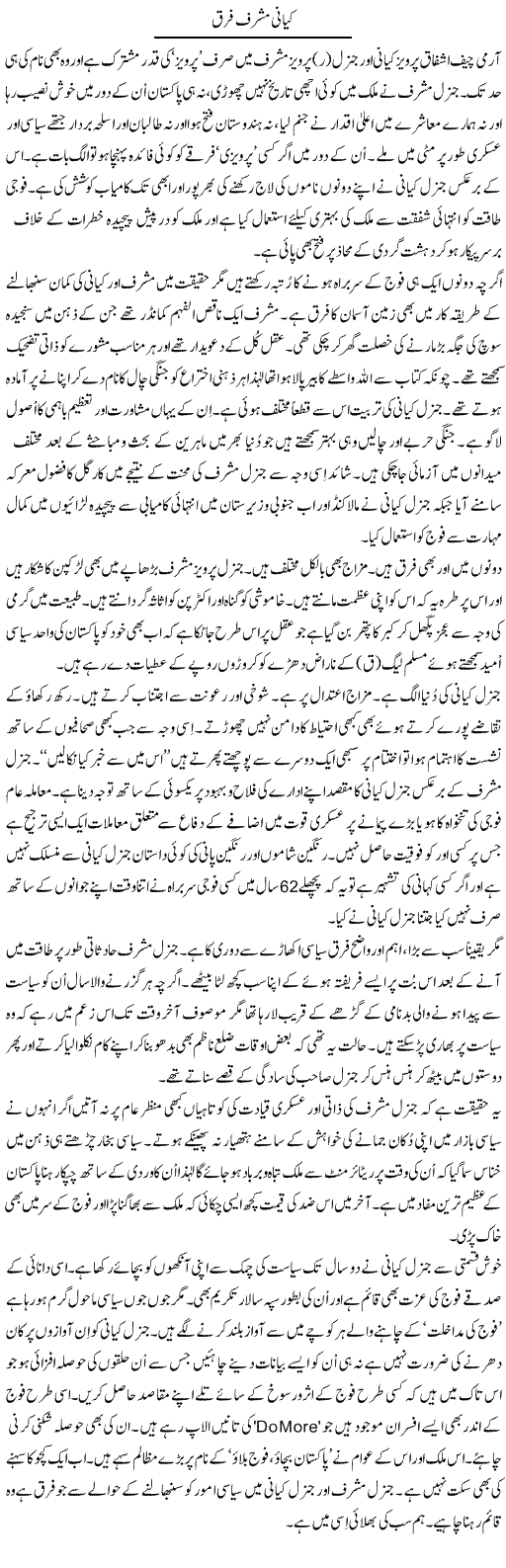
Frequently in their TV appearances (on Geo TV) and newspaper columns (in Jang and The News), agents of anti-democracy establishment, e.g. Shaheen Sehbai, Dr Shahid Masood, Ansar Abbasi and their cronies, have openly or implicitly invited General Kayani to intervene into political affairs of the country in an ultra-constitutional manner.

In the following op-ed, Talat Hussain condemns all such elements who are trying to derail democracy in Pakistan by encouraging or supporting military intervention into political affairs of the country. Talat Hussain requests General Kayani to pay no heed to such illegitimate voices.

We at Let us build Pakistan agree with Talat Hussain's analysis, and request Chief Justice Iftikhar Chaudhry to direct police to arrest all such so-called journalists (black sheep in the journalist community) and also their ruthless owners, and award maximum exemplary punishment to them under the Article 6 of Pakistan's constitution.
..
Read more...

Geo TV, reality show and the death of a young Pakistani man.

Saad Khan, a young Pakistani man took part in a reality show sponsored by a multinational company earlier this summer; he was flown to Thailand for filming what he must have thought would be the opportunity of a lifetime.

The show was planned for a large media group in Pakistan (Geo TV); the person's family was never adequately compensated, the media producers were offered an NRO by the Jang Group / Geo TV; and the news of this death was censored by the media mafia in Pakistan.

Here is an excerpt from an op-ed on Pakistani media's ruthless commercial orientation by Bina Shah.


Think ‘American Idol’, ‘The Apprentice’, ‘Fear Factor’: seemingly ordinary people are thrust into highly sensationalised but tightly controlled versions of real life, given ‘challenges’ or ‘tasks’ to overcome, and punished or rewarded for their performance. Audiences at home are invited to vote for the participants, and the result is a complete blurring of the lines between reality and fiction. Contestants may be asked to set up a business in one week, swap families for a month, or eat locusts and cockroaches in order to win a competition for their team. The contestant is a willing participant in his or her own humiliation for prize money, but it’s the advertisers who hand over the real money in this game.

Given how exciting life already is in Pakistan, you’d think we’d be immune to this kind of gimmickry. But our media thinks otherwise. In order to keep up with the worldwide trend and secure the accompanying advertising profits, local channels have begun to produce a slew of reality shows in the last few years, some ridiculous, others simply horrifying.

One example on the worse end of the scale is a show called ‘Living on the Edge,’ which appears on a Pakistani music channel and whose clips are freely available on YouTube. For the not-so-staggering amount of Rs 1,000, young men and women flock to the show’s auditions and beg to be allowed to perform a ‘dare’ while a sociopathic host screams abuse at the would-be contestants, especially women who dare to come dressed in western clothes or speak English. One unfortunate man, in his quest for fame, was filmed pushing a safety pin through his lower lip, while his hapless companion called his mother on air and begged permission to repeat the stunt.

This cringe worthy parade can be seen as mindless entertainment: the sardonic grin of the presenter as he screams ‘Rejected’, the stunned looks of disbelief on the contestants’ faces, the drama of security being called to drag away the troublemakers who can’t accept failure, all overshadow the actual performing of the ‘dare’ itself. But you’ve only got to look at the legions of youngsters desperate for a taste of fame to realise that this is one of the most unhealthy trends in an already sensationalist media with little to no standards of quality, taste, or safety. What exactly does this say about the emotional health of vulnerable young people? Where are the media standards, the watchdogs to make sure that our children are not being exploited by money-hungry producers and advertisers?

And let’s not forget that things can go horribly wrong. Saad Khan, a young Pakistani man took part in a reality show sponsored by a multinational company earlier this summer; he was flown to Thailand for filming what he must have thought would be the opportunity of a lifetime. One of the challenges thought up by the show’s creators was an underwater challenge, where contestants were asked to cross a waist-deep expanse of water while lugging a backpack filled with weights. Unfortunately, the 32-year-old man, a father of four and reputed to be an excellent swimmer, drowned in his attempt to perform the stunt successfully.

Filming was halted while the Thai authorities conducted an investigation; the media company producing the show for the multinational claimed that the stunt was tested, that competitors had signed waivers absolving the media company of all responsibility, and that all the other competitors completed the stunt safely. But the multinational and the mainstream Pakistani media broke their silence over the incident only after pressure from the online community, who asked hard questions about the incident in blog posts and online forums. Still, the multinational only issued a vague corporate statement about ‘rightness’ rather than addressing the questions raised by the young man’s death. Even worse, they have not addressed the legitimacy of reality television as a concept, and why exactly they felt the need to sponsor such a dangerous programme. People need to know the risks of participating in stunts for reality shows, at the very least, and corporate unwillingness to come through with an adequate explanation for their motives and procedures will leave countless others unaware and unprotected.

Where, again, are the media standards, the watchdogs to make sure that lives are not being destroyed by money-hungry producers and advertisers? Where are the people who can give guidance to our youngsters, to show them that there’s a world of difference between being brave for a good cause and risking their lives for no good reason? The young are reckless, and don’t always value their health and their safety, but surely there’s someone out there in the big bad world of media with a conscience who can give them all a much-needed reality check. And take that hideous show with the misogynist presenter who likes to scream at young girls and urge young boys to push safety pins through their lips off the air, please. This is not the kind of entertainment that we Pakistanis really need to see.

binashah@yahoo.com

Source

Read more...

A CJ greeted in Karachi and the events of 12 May 2007


A CJ greeted in Karachi
Guest post by Aal e Hashmat Malik


Just recently, in the last week of November 2009, the Provincial Home Minister of Sindh, Mr Zulfiqar Mirza, announced in a press meeting that his PPP government would launch an inquiry into the events of 12th May 2007 and would like to unveil the real faces behind that utter cruelty.

Let us turn to another page of our forgotten history ……when chaos had gripped the streets ofKarachi on that day. The day when Justice Iftikhar Chaudhry, the then suspended Chief Justice, had landed at Karachi Jinnah International Airport for onward move to Sindh High Court premises to address the Karachi Bar Council. Karachi had witnessed ‘orchestrated mayhem’ wherein about 46 lives were lost, and about 150 were injured, threatening a complete breakdown of law and order in Pakistan's largest and most volatile city.

Referring to UK’s daily The Telegraph’s ‘Pakistan on brink of disaster as Karachi burns’ appearing on 13th May 2007:

‘Karachi With plumes of black smoke billowing over the city of 12 million people, there were extraordinary scenes as gunmen on motorbikes pumped bullets into crowds demonstrating against …………., while police stood by and watched. Bloodstained corpses lay where they had fallen in the streets and bodies piled up in hospital morgues. As the sense of crisis deepened, the military general resolved to send in Pakistan rangers (paramilitary troops) to restore order, and to place the army on standby.

Yesterday's violence erupted as 15,000 police and security forces deployed in the city stood idly by as armed activists from Karachi's ruling party, Muttahida Qaumi Movement (MQM), a coalition ally of Gen Musharraf, blocked Mr Chaudhry's exit from the airport and took control of the city's central district.’,

It was a factual belief that Gen Musharraf had hoped to create a compliant judiciary ahead of elections which he had promised to hold later that year. But what started as a political confrontation then brought up on surface the Karachi's tinderbox of ethnic rivalry.

Referring again to the above quoted article of ‘The Telegraph’;

‘Inside Mr(Justice)Chaudhry's intended destination, Sind's high court, hundreds of lawyers, some of them bloodied after being beaten up by MQM supporters, milled about chanting slogans and receiving news on their mobile phones about the trouble engulfing them. Outside, MQM activists with pistols tucked into their jeans, blocked the entrance.’

The intelligentsia kept a view that Gen Musharraf had purposefully allowed conflicting rallies to go ahead to create the requisite level of disorder to justify the declaration of an emergency or Martial law. The prelude to violence was familiar to Karachi, where hundreds of people were killed in ethnic violence in the 1990s but first time in Pakistan live television cameras captured the situation for viewers to see government tankers used to block off routes to the airport, police and rangers conspicuous by their absence or standing idle as armed men ran amok on the streets of Karachi, corpses and wounded bodies lying by the wayside in pools of blood.

The security plans chalked out for that day were abandoned overnight. The Sindh home department withdrew the weapons of most law enforcement personnel in Karachi. Armed only with batons, the 15,000 policemen deployed in the city avoided the violent areas. Rangers who were to hold key positions on the ‘flyovers’ on the main airport road were nowhere in sight. Instead, armed men in civilian clothes held those posts, and fired into the crowds trying to reach the airport to receive the Chief Justice stranded inside.

Over at the Sindh High Court, as a lawyer Ayesha Tammy Haq witnessed, at about 5 PM the things were getting worse. Judges were not leaving the premises as there would be a rampage. City courts were being attacked. The lawyers were expecting to have army rule in Karachi. Later it transpired that:

‘…. it was a part of “the political activity” of a political party attempting to show its strength to its constituency and of course a loyalty show to see and feel by Gen Musharraf too.’

‘Not only was the Sindh High Court under virtual siege by armed activists, but lawyers attempting enter the Court were repeatedly beaten and roughed up. The armed activists did not even spare the Judges of the High Court. One judge was held at gun point and his car damaged. “While holding me at gun point, the youth called someone and stated ‘Yeh bolta hai kay High Court ka judge hai...kya karun is ka?...achaa theek hai, phir janay daita houn.’ (He says he’s a judge of the High Court. What should I do with him? Ok then, will let him go).” Many judges, unable to drive to the Sindh High Court, had to leave their official ’flag’ cars and make their way through menacing crowds and climb over the court’s back wall in order to reach their chambers.’
(Ref: an interview with Talat Hussain, Aaj TV, 18th May 2007)

[Munir A. Malik and his fellow 24 lawyers accompanying Justice Choudhry from Islamabad to Karachi were forced to remain inside the airport. The Sindh government representatives offered to transport the Chief Justice by helicopter but this offer was for him alone. Since the lawyers with him had already foiled the attempts of ‘two uniformed officers’ to ‘snatch the CJP and take him from the other side,’ he refused.]
(‘Story at the airport’, The News,20th May, 2007)

Armed men attacked lawyers at Malir District Bar, Justice Choudhry’s scheduled first stop in Karachi, killing a lawyer and injuring several others, including female lawyers. Justice Choudhry and his team, of course, were ‘externed’ to Islamabad after arguing and struggling for several hours at the airport. Late that night, residents in the low-income Ranchore Lines mohalla were awakened by loud banging on their doors. One resident narrated that it was two young boys distributing freshly cooked biryani and suji in plastic bags: “Yeh chief justice ki wapsi ki khushi mein hai” (This is to celebrate the Chief Justice’s return [to Islamabad]).

Another account can be seen here:

On the Karachi streets, Uzi’s press card had saved her again at around 05:00 p.m. as she and a colleague tried to reach the Rangers Headquarters in Dawood College. “A car chockfull of ammunition passed in front of us, stopped, backed up and stopped in front of us, Kalashnikovs pointing at the two of us from the windows. We showed our press cards and the car moved on. NEVER in my LIFE have I felt more grateful to my press card than I did yesterday.”

At around 06:00 p.m., she and her colleague were trapped by gunshots all around. “Short of climbing the walls and entering one of the houses around, there really was no other place for us to go.” They stopped a police mobile and asked which way would be safe to go. The answer, accompanied by laughter: “You can be killed wherever you go. Choose your place.”

(Ref: Eyewitness: Karachi 12th May 2007 by Beena Sarwar published in www.Chowk.comdated 30th May 2007)
In published reports, journalists prudently avoided naming the parties involved.
‘Young men toting flags and banners had set up camp outside the airport departure lounge. They hid, however, when policemen came by. Reporters in the vicinity were asked whether they had seen any political activists around. Munawar Pirzada (from Daily Times) said that he had seen some nearby. After the policemen had left, the activists came up to the reporter, dragged him by the hair and took him aside. They then proceeded to threaten him with dire consequences if he said anything the next time the policemen came around.’
(by Urooj Zia in Daily Times, 14th May 2007).

But the affiliation of these gangs was visible in the live coverage provided by several private television channels, which showed plainclothes men brandishing weapons on the deserted roads, using government tankers as cover, exchanging gunfire with unseen opponents, the tri-colour MQM flag visible on their motorcycles.

After Aaj TV’s continuous live coverage of such scenes, armed men attacked the television station, firing at it for several hours. Instead of stopping the coverage, Aaj showed live footage of reporters ducking behind a desk, shots being fired at their office, as anchor Talat Hussain provided an account of the situation on phone. Reporters in the area asked the Rangers posted nearby to help the Aaj workers trapped inside their building. The answer: ‘We’re helpless. We can’t do anything unless we have orders from above.’

Another eye-opening narration:
‘The local media received a call from a hospital, apparently sent by a doctor who had been at work for several hours attending to multiple gunshot wounded victims in his hospital lobby, where a makeshift emergency room had been set up. Nothing but he told: ‘struck down my soul more than what nine fully armed workers of a ‘local political party’ along with 2 sector office bearers did. They tried to drag out a wounded and dying body of a ‘poor politico-religeous worker’ (whose identity they later learnt) for presumably finishing him off.’ The protesting doctors were slapped around and dragged by their legs to the back of the gurney alley. With shotguns, pistols and ak-47’s in hand, the men ran back to the lobby presumably to find their target again.

The doctor ran out to the rangers and police near the hospital front gate. Their answer to his appeal: ‘Jaante ho inn logon ko phir bhi kyon larte ho…hamain upar se order hai ke inn ko char baje tak karne do jo karna hai. Char baje ke baad kuch dekhainge’ (When you know who these people are why do you still fight them … we have orders from above to let them do whatever they want until 4pm. After 4pm we will see).

As a previous party supporter, the doctor had recognized some of the assailants and called a friend related to their deputy leader Farooq Sattar. Five minutes later the men received a phone call and left, threatening the doctors (and stealing one of their cell phones, “Chikna set hai” -- it’s a cool set). “The guy they had come looking for had been shot one more time in the head. The o.t dress we had dressed him in 10 mins earlier was freshly bloody.’
(Ref: www.karachi.metblogs.com/archives/2007)

There was a story behind each of those who were killed, some belonging to one or other political party, and others just because they were there. Masked men stopped ambulances and sprayed them with bullets, killing an Edhi Ambulance driver, Faizur Rahman Khan, 65, when he refused to throw out a wounded person he was transporting to hospital from near the airport; the wounded man was also shot again. Armed gangs herded passers-by into an alley and shot dead a young overlock machine operator along with another man, in front of two colleagues who were also shot but survived to tell the television source.

As per written facts in ‘They shot us one by one...’ by Munawar Pirzada in dailytimes.com.pk, there have been reports about an SHO who guided a procession into an ambush and a pregnant woman who had to deliver her baby in the car when armed men refused to let her proceed to the hospital with her husband. The Pakistan Press Foundation (PPF) reported that several journalists were manhandled and nine wounded. Some TV cameramen were beaten and their cameras snatched or damaged.

Zaffar Abbas was correct when he wrote that Karachi was only at peace for the past many years because it suited its militants; and ‘Finger pointing’ is necessary, because throughout our history, instead of a catharsis, we simply go through a ‘jo ho gaya ab bhool jaao, aagay daikho’ (forget what has happened) attitude. Already, with the President’s pat on the back at the emergency meeting of the ruling party in Islamabad (on Monday) the MQM is back on the front foot…

Although it is unlikely that the perpetrators of Saturday’s violence will ever be brought to justice, at least they should continue to be exposed before the entire country. More importantly, they should face the consequence of such exposure. Public image is very important to the MQM and the national outrage at their conduct may be the best prospect of compelling them to change their ways’.

(Ref: ’Back to the future?’ Published in Daily Dawn of 14th May 2007)

Later Gen Musharraf was in the Chief Minister House Karachi to review the law and order situation following 12th May carnage. At this occasion a Provincial Minister Irfanullah Marwat (from Pakhtun Community) asked Gen Musharraf to order an inquiry into who had opened fire, arrest the culprits and take action against the elements responsible. The minister stressed the people would not be satisfied till the arrest of the elements responsible and strong action against them. The Pakhtun Action Committee Chief Shahi Syed stated on the occasion that all it was due to Adviser to the CM on Home Affairs Waseem Akhtar.

Gen Musharraf heard it and that’s all; military people find it hard to say sorry.

Coming back to our original, Mr Z Mirza, the Sindh Home Minister, was probably pointing out towards this core issue on the basis of his personal knowledge being a staunch political worker of the PPP and may be depending upon the reports of western press as quoted above. Being a Home Minister he had definitely got access to the secret ‘Special Branch’ reports of the Sindh police and floated his wish of conducting this enquiry at such belated stage so vigorously and in a robust manner.

Whether MQM was involved in that whole scenario or not because still it is a subject of detailed enquiry based on solid evidence but one thing is clear that the master mind behind that episode was Gen Musharraf himself, who had claimed those killings as ‘his success and show of power’ in an open jalsa held, organized and patronized by ML(Q) at
Islamabad on the same evening of 12th May 2007.

Would somebody from judiciary or executive dare to hold Gen Musharraf accountable on this issue, too.

(Aal e Hashmat)
Aalehashmat@Hotmail.com

Read more...

Dr Shahid Masood: Theft, Slander, Lies and Phobia, all in one - An analysis by Qais Anwar
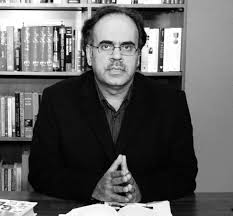
By Qais Anwar

I wrote the following article for LUBP (Let us build Pakistan) but , after watching the yesterday's Meray Mutabiq, I could not stop myself from posting it on [another website]. ..... now more and more right wingers are mentioning LUBP on the TV. A few days ago I saw Irfan Siddiqui mentioning it. [Here is an analysis of Dr Shahid Masood's journalism.]

شاہد مسعود ۔۔۔ سرقہ ؛ دشنام طرازی؛ دروغ گوءی؛ اور جاوے ای جاوے کا مرض

خاموش فلموں کا دور شروع ہوا تو خوبصورت چہرہ اور خوبصورت آواز دونوں ہی پردہ سکرین پر آنے کا معیار بن گءیں ۔ سریلی آواز سے محروم خوبصورت چہرے اس وقت تک انڈسٹری میں
جگہ بنانے سے محروم رہے جب تک پس منظر گانے کا رواج شروع نہ ہوا۔ ہاں مکالمہ نگار شروع سے ہی مختلف تھا۔ اداکار کا کمال یہ ہوتا تھا کہ سب یہ سمجھیں کہ گانے کی آواز بھی اس کی ہے؛ مکا لمہ بھی اس کا اور اداءیگی بھی اسکی۔ ہاں ٹا ءیٹل پر ہمیشہ اصل لوگوں کے نام لکھےجاتے۔ ٹی وی شروع ہوا تو یہ روایت برقرار رہی۔ٹاءیٹل پر مسودہ لکھنے والے ؛ ہدایت کار سمیت سب کے نام آتے رہے ۔ ہاں کبھی کبھی یہ بھی ہواکہ خبط عظمت میں مبتلا لوگ دوسروں سے لکھوا کر اپنےنام سے پیش کرلیتے ۔ ہمارے شاہد مسعود کو بھی شوق تھا کہ وہ خوبصورت لفظ استعمال کریں ۔یہ سچاءی کہ وہ کس کے لفظ بولتے ہیں اس وقت تک لوگوں سے مخفی رہی جب تک انہوں نے اپنے ایک پروگرام کے ابتداءیے میں عرفان صدیقی کا وہ کالم نہیں پڑھ دیا جو ایک دن پہلے نواءے وقت میں چھپ چکا تھا یا پھرجب تک موصوف نے خود ہی کالم نگاری پر طبع آزماءی نہ شروع کر دی۔ پہلے پہل یہ وہ کالم ہی تھے جو ان کی اصل ذہنیت کو سب کے سامنے لے آءے ۔ پاکستانی صحافت کی تاریخ میں سب سے زیادہ گھٹیا پن تک اترنے کا سابقہ اعزازروزنامہ سیاست کو حاصل تھا جو اس حد تک پہنچ جاتا تھا کہ موت کی کوٹھری میں بند ذولفقار علی بھٹو کے لیے ’پاگل ہو گیا’ جیسی شہ سرخیاں لگایا کرتاتھا ۔

لفظوں کے سرقے کے ساتھ ساتھ شاہد مسعود دروغ گوءی کو اس حد تک لے گءے کہ پیشہ صحافت سے وابستہ لوگوں نے بھی اس پر کراہت کا اظہار کرنا شروع کردیا۔ ابھی یہ پچھلے سال ہی کی بات ہے کہ انہوں نے جیو کے پروگرام جواب دہ میں یہ دعوی کیا کہ ڈاکٹر عشرت العباد ان کے ہم جماعت ہیں ۔ اس کا کامران خان نے یہ کہہ کر بھانڈا پھوڑ دیا کہ وہ ہم جماعت تو کیا ہم مکتب بھی نہیں رہے۔

جنرل پرویز مشرف کے استعفی کے ایک دن بعد شاہد مسعود نے رخصتی کے نام سے ایک کالم لکھا جس میں فرمایا’یہ انتہاءی مشکل تقریر تھی جس کا انتظام ایوان صدر میں صدارتی آفس سے ملحقہ کمیٹی روم میں کیا گیا تھا ۔ ایوان صدر میں صدر کے ذاتی عملے کے علاوہ صحافیوں میں صرف میں ہی وہاں موجود تھا ۔۔۔۔۔۔تقریر مکمل کرنے کے بعد صدر میری جانب بڑھے اور اور میں نے گزرے ہفتے میں دوسری بار تھینکس شاہد کے الفاظ سنے۔ تقریر کے بعد صدر مکمل طور پر ریلیکس ہو گءیےتھے ۔ جب یہاں مہمانوں کے لیے چاءے آءی تو ان کے دل گرفتہ سٹاف نے چاءے پینے سے معزرت چاہی تو صدر مشرف نے ان سے کہا کہ وہ چاءے پیءیں اور صدر نے خود بھی یہاں سب کے ساتھ چاءے پی۔ ’ شاہد مسعود کے اس کالم میں بیان کردہ واقعات کی مختلف ذراءع نے فوری طور پر تردید کر دی ۔ لیکن اس میں سب سے اہم تردید سماء ٹی وی کے حسن کاظمی کی تھی جو انہوں نے جنگ گروپ کو ایک ای میل کے ذریعے بھیجی۔ ان کے مطابق ڈاکٹر شاہد مسعود تو سرے سے وہاں موجود ہی نہیں تھے ۔میں (حسن کاظمی)وہاں اپنی میزبان عظمی الکریم کے ساتھ تھا ۔۔۔اور میرے پروڈیوسر عدیل احمد بھی وہاں موجود تھے ۔تقریر صدر کے دفتر سے نشر کی گءی تھی نہ کہ کمیٹی روم سے ۔۔۔۔۔ صدر نے میری ہم کار عظمی الکریم سے ہاتھ ملایا ۔ پھر میرے پروڈیوسر عدیل احمد اور معین خان کے ساتھ ۔۔۔۔اس وقت ان کے دفتر میں بالکل چاءے نہیں پیش کی گءی ۔۔۔۔

شاہد مسعود کی ذہنی ساخت کو سمجھنے کے لیے ان کے اسی کالم کے ان الفاظ کو دیکھنا بہت ضروری ہے ’ گزرے آٹھ برسوں میں میری گفتگو اور تجزہوں کا بنیادی ہدف ہی صدر مشرف کی پالیسیاں رہیں اور میں گیارہ ستمبر کے بعد ان کے لاءحہ عمل سے لے کر نومبر ۲۰۰۷ءکے ماوراءے آءین اقدامات تک ۔ تنقید کے ڈونگرے بساتا رہا اک عجب احساس یہ تھا کہ اب وہ ہدف اپنی جگہ سے ہٹ رہا ہے جو میرے مد مقابل رہا اور نءے اہداف کا تعین اب میرے مجھ جیسے تجزیہ نگاروں کے لیے فوری دشوار ہو گا ایک خلا ء کا احساس ۔۔۔۔۔۔۔۔۔’شاہد مسعود کا یہ نکتہ بہت اہم ہے کہ جنرل مشرف کے دور میں الیکٹرا نک میڈیا کی آمد کے ساتھ ہی جاوے ای جاوے کے نعروں کی گونج میں تجزیہ نگاروں کی ایک بڑی کھیپ وجود میں آءی ۔ ان میں سے بہت سوں نے آمر کے غیر اخلاقی اقدامات کا غیر اخلاقی اقدامات سے مقابلہ اپنے تجزیوں کا حصہ بنا لیا۔منافع کی تلاش میں اپنے ناظرین کی تعداد میں اضافے کا خواہش مند میڈیا اس طرح کے تجزیوں کو جگہ دینے کے لیے بالکل تیار تھا۔اس ماحول میں جہاں صالح ظافر جیسے لوگ جنرل مشرف کی ہاوس اریسٹ کی خبریں تک چلا دیتے تھے شاہد مسعود جیسے دروغ گوءی کے عادی کے لیے خاصی جگہ موجود تھی۔ نءی حکومت بننے کے بعد ان لوگوں کو اہم مناسب پر فاءز کرنے کی بجاءے زیادہ ضروری تھا کہ ہدف کے متلاشی شاہد مسعود جیسوں کی نو سازی پر توجہ دی جاءے ۔
rehabilitation = نو سازی

شیری رحمان شاید یہ کام کر لیتں لیکن شاہد مسعود کو پی ٹی وی کا چءیر پرسن بنا دیا گیا ۔ راوی بتا تا ہے کہ شاہد مسعود ذرداری صاحب کی پبلک ریلیشننگ کا کام بڑھ چڑھ کر نبھا رہے تھے لیکن شیری اور شاہد کی باہمی مسابقت شاہد مسعود کی شکست پر منتج ہوءی ۔ ذرداری نے شاہد مسعود کو نہیں بچا یا اور یوں شاہد مسعود کو وہ ہدف مل گیا جس کی اسے تلاش تھی۔

ہدف کی طرف بڑھتے بڑھتے شاہد مسعود پستی کی اس دلدل میں اتر گءے جس کی انتہا ان کے کالم جءے بھٹو کی شکل میں ظاہر ہوءی۔بہت سے لوگ اس کالم کا جواب دے چکے ہیں اس لیے میں یہاں اس کالم کا صرف ایک پہلو درج کرنے پر اکتفا کروں گا

اس کالم میں شاہد مسعود نے یہ بھی ثابت کرنے کی کوشش کی کہ محترمہ اپنے بچوں کو آصف زرداری سے بچا کر رکھتی تھیں اور ان کے طویل عرصہ تک جیل میں رہنے پر خوش تھیں ۔۔۔۔۔۔۔ دنیا کی بہترین درس گا ہوں سے فا رغ التحصیل خاتون یقینی طور پر اپنی اگلی نسل کو اس ذہنیت سے محفوظ رکھنا چاہتی تھی جو کسی سینما کے باہر ٹکٹ بلیک میلنگ کرکے یا ڈسکو کلبوں میں مار پیٹ وغیرہ میں ملوث ہو کر پیدا ہو جاتی ہے اور تبھی جب محترمہ کو اس حقیقیت کا اندازہ ہوا کہ ان کی وہ اولاد جو برس ہا برس سے۔۔۔اس کردار سے دور رہنے کے بعد خوش قسمتی سے اس کے اثرات سے محفوظ اپنے ذہنوں میں اس کے بارے میں ۔۔۔اچھے خواب بنے بیٹھی ہے……۔ خاوند اور بیوی کے تعلق اور باپ اور اولاد کے رشتے پر اس طرح کا تبصرہ صرف شاہد مسعود ہی کر سکتے ہیں۔

اور اب اٹھاءیس نومبر 2009 کا میرے مطابق ۔ جاوے ای جاوے کا مرض عروج پر ہے؛ شاہین صہباءی ؛ انصار عباسی اور اکرم شیخ دروغ گوءی اور دشنام طرازی میں مصروف ہیں ۔ ہاں اب تیا ری عدالتوں اور حکومت کے درمیان جھگڑا کرانے کی ہے۔ وہ شاہد مسعود جو پیلز پارٹی کے کا رکنوں کو گمراہ کرنے کے لیے خود کو بی بی کا ہمدرد ظاہر کرتے ہیں آصف زرداری کی دشمنی میں بی بی کے سخت ذاتی دشمن ڈاکٹر مبشر حسن کو میدان میں لے آءے ہیں


Read more...

Announcement: Pakistan Ignoble Award for Journalism (PIAJ)


Let Us Build Pakistan proudly announces the establishment of Pakistan Ignoble Award for Journalism (PIAJ). It will be awarded annually to a Pakistani journalist who has flouted all the norms of journalistic decency, objectivity, and fair play. Every December starting December 2009 a journalist whose functioning qualifies to be a journalist without a conscience will be PIAJ-ed.

We would like our readers and visitors to offer their nominations for the Pakistan Ignoble Award for Journalism (PIAJ). In your comments below, please provide the following:

1. Name of the nominee
2. Your justification for his/her nomination in no more than 4 sentences (about 100 words).
Read more...

Saturday, 28 November 2009

Message of President Asif Ali Zardari on the eve of Eid ul Azha


"My dear countrymen!
Assalam Alaikum wa Rehmatullah Barakat-o-hu,
I congratulate the nation on the blessed event of Eid ul Azha and pray that may Allah Almighty protect them and grant happiness in this world and hereafter.

Eid ul Azha is observed in remembrance of great gesture of obeyance by Hazrat Ibrahim (Peace be upon him) before Allah Almighty and the exemplary compliance of Hazrat Ismail (Peace be upon him).

Our beloved Prophet Hazrat Muhammad (Peace be upon him) declared this sacrifice as 'Sunnat-e-Ibrahimi' and regarded it 'Wajib' on every affluent person as a permanent worship.

My dear people,
The 'Sacrifice' develops a sense of devotedness, courage and submission to seek blessings of Allah Almighty. Sacrificing different animals is a symbol of our pledge to be ready to give
every kind of sacrifice for Allah Almighty. It develops 'Taqwa' (piety), which should be the objective of life to attain success in the world and hereafter.

Today the country is facing many problems. The menace of terrorism and extremism is weakening the country. To resolve these issues, there is a need to follow the spirit of sacrifice,
brotherhood and fraternity, peace and harmony, love and affection, as these elements are required in these circumstances more than ever.

Islam is a religion of peace. We need to follow it, not only by ourselves but also to promote its message throughout the world besides waging 'Jehad' against poverty, destitution and
unemployment.

May Allah Almighty protect and guide us all. Amen.

Pakistan Paindabad"

Read more...

Above the law: Can anyone hold this child of Islamofascism accountable?
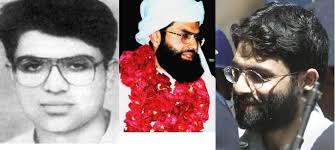
Jailed militant’s hoax calls drove India, Pakistan to brink of war
By Azaz Syed
Thursday, 26 Nov, 2009

ISLAMABAD: Omar Saeed Sheikh, a detained Pakistani militant, had made hoax calls to President Asif Ali Zardari and the Chief of Army Staff, Gen Ashfaq Parvez Kayani, in a bid to heighten Pakistan-India tensions after last year’s terrorist attacks on Mumbai, investigators have told Dawn.

‘Omar Saeed Sheikh was the hoax caller. It was he who threatened the civilian and military leaderships of Pakistan over telephone. And he did so from inside Hyderabad jail,’ investigators said.

The controversy came to light after Dawn broke the story, exactly one year ago, that a hoax caller claiming to be then Indian foreign minister Pranab Mukherjee was making threatening calls to President Zardari.

It was on the night of Nov 26 last year that Saadia Omar, Omar Sheikh’s wife, informed him about the carnage in Mumbai. The sources said that the information was passed on to Omar in Hyderabad jail through his mobile phone, which he was secretly using without the knowledge of the administration.

All but one of the attackers who India alleged were Lashkar-i-Taiba terrorists were shot dead by security personnel.

Saadia kept updating Omar about the massacre through the night and small hours of the morning. On the night of Nov 28, when the authorities had regained control over the better part of the city, Omar Saeed, using a UK-registered mobile SIM, made a phone call to Indian External Affairs Minister Pranab Mukherjee.

He told an operator handling Mr Mukherjee’s calls that he was the President of Pakistan.

Indian officials started verification as part of security precautions and, after some time, the operator informed Omar Saeed (who was posing to be Pakistan’s president) that the foreign minister would get in touch with him soon. Omar now made a call to President Asif Ali Zardari and then the Chief of Army Staff.

He also made an attempt to talk to the US secretary of state, but security checks barred his way.

The presidency swung into action soon after Mr Zardari’s conversation with the adventurous militant.

President Zardari first spoke to Prime Minister Gilani and informed him about the happenings. He also took Interior Minister Rehman Malik into the loop.

In Rawalpindi, Gen Kayani immediately spoke to the chief of the Inter Services Intelligence, Lt- Gen Ahmed Shuja Pasha.

According to sources, not only President Asif Zardari was taken in by Omar’s audacity but the COAS was also baffled by his cheekiness.

Gen Kayani, sharing his thoughts with close associates, said he had been bewildered by the caller’s threatening tone.

But Maj Gen Athar Abbas, the military spokesman, finds the report unbelievable. ‘I am not his (Army chief’s) operator. I don’t know who puts calls through to him, but I think this can’t be true,’ said an incredulous Athar Abbas.

Interestingly, when Omar Saeed Sheikh was making these hoax calls, the Lashkar-i-Taiba (LET) chief was also in Karachi, but it is not known whether Omar Saeed was acting under the guidance of Zakiur Rehman Lakhvi or on his own.

INVESTIGATIONS: On the other hand, investigators got into the act without wasting time, coming up with their findings within hours.

Their conclusion was that the phone call which came from the Indian external affairs ministry was actually their (Indians’) check.

They said the calls to President Zardari and the army chief were made from a Britain-registered SIM.

Gen (retired) Pervez Musharraf, in his autobiography, had alleged that Omar Saeed was an agent of MI6, the British intelligence agency.

The very next morning, Nov 29, Hyderabad jail was raided by intelligence agencies and over a dozen SIMs were recovered along with two mobile sets. Majid Siddiqui, the jail superintendent, was suspended.

‘I don’t know much but it is true that some mobile SIMs and mobile sets were recovered from Omar Saeed Sheikh when he was in Hyderabad jail.

I got him transferred to Karachi jail because that is a far better place for such high-profile terrorists,’ Allauddin Abbasi, DIG Prisons, Hyderabad, told Dawn over phone.

The authorities had a word with Saadia Omar too. She was advised to ‘control’ herself. The matter was then placed in the files of secret agencies marked as ‘secret’.

The Federal Investigation Agency never interrogated Omar Saeed about the Mumbai attacks. Dawn’s efforts for getting the viewpoint of Tariq Khosa , the FIA chief, drew a blank.

HIGH PROFILE: Omar, currently confined in a high security cell of Karachi Jail, has a long record of militancy, from kidnapping foreigners in Mumbai in 1994 to kidnapping Daniel Pearl in Jan 2002.

Omar Saeed Sheikh was freed by India in Dec 1999 as part of a deal that saw New Delhi agreeing to release a number of militant leaders in exchange for the freedom of hostages on board an India plane hijacked to Kabul.

Soon after his release from Indian captivity, Omar Saeed developed close relations with the LET leadership, including Zakiur Rehman Lakhwi.

He was invited to a training camp in Muzaffarabad, the capital of Azad Kashmir, where he spent a couple of days delivering lectures to recruits.

Sources said Lakhwi wanted Omar to join LET and give the organisation an international face. In Feb 2002, Omar was arrested for the murder of US journalist Daniel Pearl.


Read more...

Friday, 27 November 2009

President Zardari asks party leaders, workers not to forget terrorism affected‏ people

By Jarri Mirza


ISLAMABAD, Nov 27 (APP): Co-Chairman PPP Asif Ali Zardari has advised the party leaders and workers not to forget the people affected and displaced by terrorism and militancy and include them in the celebrations of Eid-ul-Azha.

"The martyrs of terrorism and the people displaced due to the fight against militancy in Swat and Waziristan have sacrificed their today for the future of country and nation and the nation stands by them in this hour of distress", Zardari said.

He advised the party-men including the Ministers, MNAs and other party leaders and workers to visit the bereaved families affected by terrorism and militancy on this auspicious occasion.

"We must remember and extend every possible help to those courageous and honorable fellow countrymen, who sacrificed their lives or suffered for the sake of the country and nation".

The PPP Co-Chairman also praised the courage and patriotism of those who laid down their lives, those who lost their dear and near ones and those who suffered in many other ways in this war against terrorism and militancy.

Read more...

Chargesheet against government - Part I

By: Humza Ikram

SUSPECT.................................................Fehmida Mirza

ALLEGATION. ...................................... First woman speaker of Asia and the Muslim world.

CRIME ..................................................(i) Conducting in-camera briefings on national security, where top army and intelligence agencies brief people's representatives about security situation. (ii) Allowing parliamentary opposition to hold chairmanship of major committees including chairmanship of public accounts committee.

(iii) Creating two of the most important parlimentary committees

(a). Defence Committee which was formed after the inn-camera session on national security.

(b). Constitutional Amendment Committee where every party including Baluchistan's nationalist parties have a representation.

(iv) Allowing private member bills to table in the parliment .(Duniya Aziz Private member bill).

.

SUSPECT.................................................Hina Rabbani Khar

ALLEGATION........................................First woman in Pakistan to announce national budget in the parliment.

Crime....................................................(i). PM nominated her as focal person regarding IDP's relief operation. 3 million IDP's got 25000 each through debit cards. (ii) Co-chaired FODP ministrial level summit in Istanbul.

SUSPECT.................................................Shabaz Bhatti

ALLEGATION.........................................Ready to die for religious freedom.

CRIME..................................................... (i) Accepted an international medal for championing the rights of minorities in Pakistan.

(ii) Wants to revisit blasphemy laws.

SUSPECT.................................................FARZANA RAJA

ALLEGATION........................................Active participation in popular politics.

CRIME.........................................(i). Pleaded her case in the federal cabinet to get biggest chunk of funds from social sector development for Benazir Income Support Programme (BISP. (ii) She is seen distributing BISP forms among poor woman from Khyber to Karachi , Gilgit to Quetta ,and from Attock to Multan.

Other Major Crimes

SUSPECT.................................................Dr SABA GUL KHATTAK

ALLEGATION......................................... She is the first person from NWFP who is appointed as a member of planning commission.

CRIME....................................................she has a history of fighting for the rights of woman and refugees, and the defiance of child labour .

SUSPECT.................................................Fakhar Zaman

ALLEGATION.....................................He has been appointed as Chairman of Pakistan Academy of Letters. Instead of having Islmao-fascists ideas, he inclined towards just distribution of resources (communism and socialism). He is an admirer of Zufiqar Ali Bhutto; went to jail with him; His five books were banned during Zia's regime.he is chairman of world punjabi congress. His books are equally popluar in Indian Punjab. He wants to spread Sufism!

Crimes................................................(i) starting an annual awards for writer and poets.

(ii) organizing Sufi Conference.


SUSPECT..........................................Justice Retd Rana Bhagwandas

ALLEGATION.................................First non-muslim to be appointed as chairman of FPSC.


Read more...

PML-N's fact sheet on corrupion of our saviours in Pakistan Army
Here is an account of the first three years of corruption by General Musharraf and his cronies in Pakistan Army (1999-2002) documented by PML-N. It may be noted that the level of corruption by the military and civil establishment in Pakistan was much higher in the subsequent 6 years, 2002-2007. Source

In the words Aal-e-Hashmat, there are certain innocent questions which beg answers :

· Why the flag-bearers of NRO scenario are blind towards this aspect of institutionalized corruption in Pakistan.

· Why only politicians and bureaucrats should be punished under NAB ordinance and not the army officials.

· Why the Parliament never thought of causing an amendment in the Army Act if the Generals cannot be investigated by NAB and cannot be tried in ordinary courts.

· Have any President of Pakistan, being Supreme Commander of forces, ever bothered to gather the statistics of inquiries or court martials conducted in connection with corrupt army officers and their organizations.

· Have the Supreme Court of Pakistan ever thought of initiating a suo moto action over any financial scam involving army generals.

· Have any Bar Association ever thought of moving a petition before the Supreme Court to bring corrupt army generals in the ambit of ‘equal citizenship’ given in the Constitution of Pakistan.

· Have any prominent anchor of media like Kashif Abbassi, Hamid Mir, Dr Shahid, Mazhar Abbas and Talat Hussain ever tried to float an opinion inviting discussions and comments of intelligentsia over the issue that if politicians and bureaucrats are being dragged in the streets of public consent then the generals should also be treated at par.

Let us hope that the Supreme Court steps forward to provide justice on the basis of equal basic rights for all and no citizen of Pakistan or institution be declared as ‘sacred cow’ now.


FACT SHEET

Track Record of Musharraf Regime

Released by Muhammad Siddique-ul-Farooque Central Information Secretary

Pakistan Muslim League (Nawaz) at a press conference on Sunday , October 06,2002.

The government of General Pervez Musharraf, which forced its way into power on October 12, 1999, has completed the tenure allowed to it by the Supreme Court under the controversial Rule of Necessity. It is time that the people of Pakistan take stock of the three-years performance of this regime, and decide through ballot whether they would like their elected government to continue the policies and mode of government introduced and practiced by the military rulers, or they want a government more open, more competent, more efficient, more sincere, more answerable and more responsive to the needs and aspirations of the nation.

CORRUPTION

One of the reasons, belatedly stated by General Musharraf for his capture of power, was that he wanted the country rid of corruption. In fact, his move was designed to provide protection to the most corrupt element in Pakistan -- the top brass of the armed forces. Out of the 135 billion rupees of defense budget, about one third of the amount, or 45 billion rupees are normally spent on purchase of weapons and equipment. And, as this fact sheet would show, an estimated amount of 31.64 billion went into the pockets of corrupt generals and other senior officers.

Prime Minister Nawaz Sharif, fully aware of this situation, had decided to eliminate this corruption. For the first time in Pakistan’s history, he dismissed Admiral Mansurul Haq for receiving illegal gratification in the submarine deal. The Prime Minister had decided to arrest the admiral and recover the amount that he had looted, but his colleagues in the military urged the Prime Minister to limit the action against Mansurul Haq to mere forced retirement in order, what they called, to protect the image of the institution, and then the same friends helped Mansurul Haq to flee abroad.

However, the corrupt generals, feeling the sword of accountability dangling over their heads, planned removal of the elected government, and then launched a campaign to malign politicians and the political institutions. The objective was to keep public attention away from their own misdeeds. General Pervez Musharraf made it clear on the out set that that the National Accountability Bureau, headed by a serving general, would not probe into alleged corruption of the military and the judiciary. Later, publication by courageous pressmen of revealing reports about massive bribes, commissions kick-backs in armament purchase deals, and projects handles by the Army Welfare Trust, Shaheen Foundation, Defense Housing Authority etc. forced the regime to take token action against Admiral (retd.) Mansurul Haq, who was let off after recovery of a meager amount of 750 million rupees out of his huge ill-gotten assets worth $100 million, i.e. 6 billion rupees.

The fact remains that corruption is deep rooted among the higher ranks of the armed forces and the institutions under military control, and the regime blatantly refuses to check it. NAB Prosecutor-General Raja Muhammad Bashir categorically stated on August 6, 2002 that the NAB law would not be invoked in any way against the members of the armed forces. The military spokesmen have been arguing that the armed forces had their own internal system of accountability. As a matter of fact, that system is a fraud. A large number of cases can be cited to prove that culprits awarded heavy sentences by the military courts were freed by the high command after a few weeks of imprisonment. Commodore Shahid’s case is one example. He was sentenced to 7 years of hard labor, but was freed after he spent six weeks of imprisonment at his home!

1. Land Grabbing: The colonial tradition of land grabbing by military officers continued unabated during the past three years.

a) 111 armed forces men have allotted to themselves at least 400 or more kanals each of prime land in Bahawalpur and Rahimyar Khan districts, heart of Punjab, "to defend it from the enemy," at the throw away rate of Rs 47.5 per kanal, while the real price in those areas ranges 15,000 to 20,000 rupees per kanal. Thus 35,000 kanals of land were distributed among 111 military men in one case alone. Theypaid 1,662,500 rupees at the nominal rate of 47.5 rupees per kanal, while the real price comes to 700 million rupees. The list includes the names of:

· General Pervez Musharraf, Current President, 400 kanals in Nouabad village, Yazman, Bahawalpur.

· General Moinuddin Haider, Current Interior Minister, 400 kanals in Chak DB/43.

· General Aziz, Chairman Joint Chiefs of Staff Committee, 400 kanals in Chak DB/44.

· Lt. General Khalid Maqbool (Current Governor Punjab), 400 kanals in Chak 54/p.

· Major General Muzaffar Usmani (Later promoted to Lt General and retired recently as Deputy Chief of Army Staff Musharraf), 400 kanals in Chak 93/p.

· Lt. General Muhammed Afzal Janjua, 400 kanals in Chak 54/p

(i) 64 serving and retired officers of colonel to general rank got 400 kanals or more. They include:

10 Generals, 9 Lt. Generals, 16 Maj. Generals, one Admiral, one Air Marshal, 18 Brigadiers, 5 Lt. Colonels and 3 Colonels.

They paid 19,000 rupees for 400 kanals of land worth 400,000 rupees at market ratesif the land is unirrigated. The value of irrigated land in these areas is much higher.

(ii) 47 non-commissioned officers also got plots of agricultural land measuring 200 kanals or less.

Many of the generals have already sold their lots earning millions of rupees in profit at market rates, while others have turned into feudal lords with hired labor toiling for them.

b) Former Chairman of national Accountability Bureau Lt. Gen. Muhammed Amjad was allotted a 2-kanal (1000 sq. yd.) plot in Lahore, with a market value of 10 million rupees, against mere 800,000 rupees payable in 20 years. Invested in Defense Saving Certificates, those 800,000 rupees would multiply to 225 million rupees. He immediately sold half of the plot for 4.5 million rupees earning a profit of 8.2 million rupees on one plot.

c) General Musharraf has acquired a commercial plot, with the market value of 20 million rupees, in Defense Society, Lahore, for mere 100,000 rupees that he will pay in installments spread over 20 years. The General has neither showed this piece of land in his assets, nor sold it. If 20 million rupees are invested in the Defense Saving Certificates, they would grow up to about 500 million rupees. He owns several plots in other localities with a total market value of 200 million rupees. He has gifted a house with a market value of 20 million rupees to his daughter, which he has not shown in his assets. The 400 kanal agricultural plot that he got in Bahawalpur is also not mentioned in his assets.

d) The ISI has forced Environment Minister Shahida Jameel to allot 100 acres of land in the Margalla Hills National Park, one of the big attractions of the capital city. The agency wants to construct a new and “safe” Headquarter as well as, quite intriguingly, a housing colony for its officers. An official summary generated by Barrister Jameel’s ministry has been sent to President Pervez Musharraf, for an urgent decision. Initially the Environment Ministry response was one of alarm, as giving away 100 acres on these hills would almost destroy the whole area as a natural park, which needed to be preserved. When the ISI bosses learned about it, they immediately contacted the Minister and “convinced” her about the immediate need of 100 acres. The lady, naturally, could not resist the pressure. Again, the Generals would grab the best pieces for their homes.

e) Another 100 acres is being selected in Bahawalpur for the outgoing Naval Chief. Defense officials’ teams have been seen visiting Bahawalpur to select these 100 acres, while an offer had also been made to the outgoing Chief to become Pakistan’s Ambassador to Tunisia. The Chief wants to be Ambassador to France and his argument is that his force has a lot to buy from France, like the Augusta submarines his predecessor Admiral Mansurul Haq bought.

f) In a report, after a random check of 4 out of 11 military estate offices in 2000 –2001, Director General of Audit of the Defense Services has found close to five billion rupees loss caused by misuse of land, mismanagement and encroachments. According to an analyst, “the report is an outright indictment of the military, as it not only shows the monumental size of the lands acquired, but also the losses being caused are gigantic, compared to peanuts for which politicians are persecuted day in and day out.”

g) The Defense Housing Authority has been grabbing large chunks of valuable residential land at nominal prices around the country for the exclusive benefit of officers of the armed forces. For instance, in January 2001, the Sindh Governor bypassed the Sindh High Court stay orders, and permitted sale of highly valuable 200 acres of coastal land along Clifton, Karachi, at embarrassingly low rates to Defense Housing Authority. The land valued at market rate of Rs. 4,000/- per square yard was sold to Defense Housing Authority at Rs 20/- per square yard. Thus, the governor caused a staggering loss worth billions of rupees to the exchequer! An acre contains 4840 square yards. The real cost of 200 acres, multiplied by 4,000 per sq. yd. comes to 3.872 billion rupees.

2. Defense Purchases: The submarine purchase scam involving Mansurul Haq is only a tip of the iceberg. Many more such deals with heavy kickbacks are hidden in the military closets. A large of deals for purchase of tanks, submarines, mine hunters, Mirage aircraft and army jeeps were signed through the Army Welfare Trust, Sheen Foundation and Bahria Foundation. It is estimated that various military officers pocketed commissions totaling 5.7 billion rupees in these deals.

a) A former NAB Chairman is reported to have written to the three service chiefs to provide records of certain arms deals, but NAB still awaits an answer.

b) The records could provide proof to the allegation that a former air chief Abbas Khatak received three million dollars (180 million rupees) in the purchase of 40 old Mirage aircraft for 120 million dollars. He is also accused of receiving kickbacks in deals for French missiles and Italian radars.

c) Another former air chief Farooq Feroze Khan is suspected of receiving 5 percent commission on purchase of 40 F-7 aircraft for 271 million dollars.

d) In 1996, Army bought 1047 GS-90 jeeps at 20,889 dollars per jeep, while the market price of the jeep was 13,000 dollars. NAB sources have been reported saying that some senior army officers pocketed 8.5 million dollars (510 million rupees).

e) The British Inland Revenue Services wrote a confidential letter to the Central Board of Revenue (CBR) in Islamabad to confirm a payment of five million pound sterling (450million rupees) in commission to an Islamabad-based Pakistani citizen who had acted as an intermediary between the British agent of an American company and the Pakistan Army for an 80 million pound sterling deal.

When summoned to the CBR in Islamabad for confirmation about the payment he had received from London, the Pakistani agent stunned the then chairman CBR Moinuddin Khan by acknowledging, unhesitatingly, that he had received the amount mentioned in the letter.

This shadowy businessman soon dropped a bombshell by disclosing that he got only 200,000 (2 lakh) pounds from the total payment of five million pounds (50 lakh pound) while the remaining amount was distributed among four senior officers of the Army. He also provided an actual breakdown of the payments and impressed upon the then CBR chairman that the then Chief of Army Staff had personally authorized the contract, meaning the COAS was also involved in corruption.

Within next few days a retired major general, who was the former Director General Weapons and Equipment (DGW & E) at the GHQ and had structured the deal with the American company through its British agent, approached the top CBR official and briefed him as how the disclosure and any probe into this deal would jeopardize the national security interest of the country.

After a flurry of activities between the CBR and some retired military officials, the CBR shelved the matter. This controversial deal is understood to be in the knowledge of the present military set-up, but there is nothing on the ground to suggest that it is being probed afresh.

f) Around June/July this year, Pakistan Army awarded a contract for purchase of 1000 Hino trucks at $40,000 per truck, while the Gandhara Industries had offered Isuzu truck of same specifications at $25,000. As per standard procedures for bulk military purchases in Pakistan, no international tenders were invited but tender documents were sent to four pre-selected companies for procurement of 1,000 5-ton 4x4 trucks (ammunition carrier vehicle) by the director general military purchase on April 10. Gandhara Industries sources dispute the Army's claim that their vehicle was not approved as 5-ton ammunition carrier. The Isuzu trucks were delivered to the Army for extended trial in February and after two months of trials the vehicle was finally short-listed and approved as 5-ton ammo carrier at the GSEEC meeting held on April 13. However, the top brass made final decision in favor of the Hino trucks. The loss to the national exchequer in this deal, at the rate of $15,000 per truck amounted to $15,000,000 (900 million rupees).

g) Pakistan Army's purchase of more than 3,000 Land Rover trucks in 1995 had also generated controversy with the allegation that the owner of Sygma motors, which had supplied the vehicles, was closely associated with the then chief of general staff of the Pakistan Army. Corruption amounting to 2 billion rupees is alleged in that deal.

h) The Field General Court Martial (FGCM) sentenced former Naval Intelligence Chief Commodore Shahid to 7 years of hard labor, but former Chief of Naval Staff Admiral Fasih Bukhari wrote off his sentence after three months, which he had spent in the comfort of his home. It is believed he was freed after he threatened to disclose many more shady deals including a 250 million dollars purchase of mine sweepers.

i) In April 2001, the Public Accounts Committee ordered court trial of 22 corrupt officers of Garrison Engineers (Army) Rawalpindi for causing over a loss of over one billion rupees to the national exchequer with dubious purchases and embezzlement. Defense Ministry officials present at the PAC hearing opposed publication of the culprits’ names, whereupon senior PAC member Lt. General Talat Masood (retd.) admonished them and said that hidden faces involved in corruption must be exposed.

3. WAPDA: The Water and Power Development Authority (WAPDA), controlled by army officers, has raised power rates 13 times during the past three years totaling 40 percent rise over the 1999 levels. The authorities always take shelter behind the pretext of budget deficit. But analysts have pointed out that the deficit is mainly due to mismanagement and rampant corruption. One instance of blatant corruption is as follows:

WAPDA purchased over three million electricity meters during past three years at exorbitant prices of Rs 1,050 and Rs 1,125 per meter. All these purchases were made by bypassing the due process of open tenders and made through closed-door negotiations. The real cost of a meter comes to around Rs 456 per piece. Thus, 1.65 billion rupees were pilfered in this deal.

4. Motorway: The Motorway Project was a product of creative imagination of Prime Minister Muhammed Nawaz Sharif. He completed the Lahore-Islamabad motorway, and the contract for Islamabad-Peshawar motorway was given to a Turkish firm. It was to be completed by December 2000. The military regime, after cutting the size of six-lane road to four lanes, forced that contractor to withdraw by delaying payments and creating administrative hurdles. Later, the contract was awarded to a new Pakistani consortium lead by Husnain Construction, without floating any tender. The firm hired the services of Brig. Aftab Siddiqui (retd.), father-in-law of Musharraf’s son Bilal, as consultant. Husnain Construction owner Yousaf Sheikh told a news conference in Islamabad that Brig Siddiqui was to be given a share of 2 percent in the profit, and that his company’s business under the current military rule included purchase of about a dozen of “sick industrial units”.

5. Karakoram Express: Pakistan Railways, headed by former ISI chief, made a deal of purchasing 175 passenger coaches from a Chinese firm for 200 million dollars despite the fact that the Pakistani factories were fully competent to manufacture the coaches, which have even found many foreign buyers. When 35 of these coaches arrived in August, they were found to be much wider than the railway platforms in the country could accommodate. Millions of rupees had to be spent on trimming the platforms. Many more millions were earlier spent from the national exchequer on numerous visits of the Railways chief and his experts to China. It appears that their concerns in those visits were other than discussing technical details of the deal. It was a test case for probe into suspicions of corruption, as well as lack of foresight and competence. But neither an inquiry for fixing responsibility was announced nor any heads were seen rolling.

6. UBL Sale: The Privatization Commission of the Musharraf regime sold 51 percent shares of the United Bank Ltd. for 12.35 billion rupees to a consortium with foreign participation through an out of the process re-bidding that in no way can be termed as transparent.

UBL is Pakistan’s fourth largest bank with 1,400 branches in the country and 16 international branches, manned by 11,000 strong work force. Senior officers of the Finance Ministry had been expecting to get a price of 20 billion rupees, while the successful bidder was also reported to be willing to pay 17 billion rupees. However, the Privatization Commission let it go for mere 12.35 billion, and the regime immediately issued a Letter of Acceptance. The so-called financial wizards of General Musharraf conveniently passed over the chance of getting 7.65 billion rupees more for the national exchequer, but they cannot do away with widespread allegation that this amount was pocketed by officials.

7. Pak-Saudi Fertilizers Ltd.: The regime also sold Pak-Saudi Fertilizers Ltd. for just 7 billion rupees with huge profits, stocks and work in progress. The government failed to watch the interests of the nation in that deal also. It is alleged that corruption of about 2 billion rupees was committed in this deal.

8. Police Cars: The military regime officials have made it a regular practice of making huge purchases without calling tenders. For instance, in May 2002, the interior ministry purchased 349 luxury cars of up to 1300cc for investigation wing of the police. No tenders were called, and 259 million rupees were spent at the sweet will of the concerned officials. The officials have been committing this sort of corruption, because they are sure to get all of their illegal actions indemnified with the force of the gun.

9. Golf Club: Pakistan Navy spent 13.112 million rupees on installation of air-conditioners and sprinkler irrigation system in the Islamabad Golf Club, which is in the hands of a private organization. Public Accounts Committee was informed that the money was spent under a directive of former president Farooq Ahmed Khan Leghari now chief of the Millat Party, who happens to be one of the staunchest supporters of General Musharraf. In fact, the regime has condoned all misdeeds of Mr. Leghari, including the Mehran Bank scandal and renovation of his ancestral home with government money.

10. Special Education Fraud: Like the other departments of the military regime, the education department has also been indulging in corruption. It was reported in August 2002 that officers of the Special Education Directorate have pilfered 95 million rupees earmarked for education of handicapped children.

Conclusion

We present these facts to the people of Pakistan to illustrate the grim reality that deep-rooted corruption of the generals has soiled the reputation of national armed forces. It is, therefore, our considered opinion that mere internal system of checks in any institution fails to conduct impartial, transparent and effective accountability due to personal relationships and mutual interests.

The process of accountability should be impartial, uniform and across the board. The Musharraf regime has targeted the institution of politics as the bedrock of corruption. In reality, the corrupt have turned the institution of the armed forces into the most corrupt element of the society. It is essential that this institution, which used to be the pride of the nation, be saved from further disgrace, and its respect, credibility and prestige be restored with effective measures.

A high-powered representative commission with judicial authority should be set up to purge the armed forces of black sheep and recover the monies plundered by billionaire retired-generals and other officers. The commission should include Supreme Court judges of unblemished reputation, President and General Secretary of Pakistan Bar Council, Leader of the Opposition and the leaders of other parliamentary parties. This demand of ours is justified in view of fact the generals who captured power time and again from 1958 to 1999, mostly confined accountability to the politicians, while the generals alone were responsible for grave crimes of breaking the country and unmatchable corruption. Until big criminals are apprehended, the cause of justice would not be served and all claims of rooting out corruption would prove to be mere mirage.

.


A relevant comment:

By i_shah: (source: pkpolitics)

let us try to answer the questions raised in the article:

· Why the flag-bearers of NRO scenario are blind towards this aspect of institutionalized corruption in Pakistan.

-Most of these flagbearers of the NRO cause are opportunists, who cannot resist the urge of mid-term elections and the chances of themselves getting popular with all the hypethey are creating over the issue. Sadly the public is equally responsible for this attitude as is shown by the growing popularity of coas kiyani in gallup surveys, desspite the fact that he and his corps cmdrs are the main shield hindering the proseqution of military corrups

· Why only politicians and bureaucrats should be punished under NAB ordinance and not the army officials.

-the army considers itself above the law, getting away scot free from even gruesome incidents like the humiliation of a teacher by petty army guards. i believe no action was taken against them. in a civilized society a teacher occupies the prime position of respect- not so in ours. there was some hue and cry but ultimately it died out and now we as a nation hardly remember the incident – again a case of apathy on our parts.

· Why the Parliament never thought of causing an amendment in the Army Act if the Generals cannot be investigated by NAB and cannot be tried in ordinary courts.

– the parliment seems afraid that kiyani and co will send them packing if they dare tread that path. the “bedaar” media keeping mum over the issue and eulogising kiyani every now and then is certainly of no helf either. the parliment is helpless even as army personell-even lowly ranks- are not ready to pay a meagre Rs. 5 toll tax over roads and bridges. when they can not extract this small amount how can we expect them to recover millions out of the corrupt generals.

· Have any President of Pakistan, being Supreme Commander of forces, ever bothered to gather the statistics of inquiries or court martials conducted in connection with corrupt army officers and their organizations.

-the supreme commander has never been acknowledged as such by the army. how can we expect him to act and court martial corrupt army officers. kiyani and co will act over night and depose him in “supreme national interest” with his huge unpopularity and corruption being cited as primary reason-by the corruption of the current president is nowhere near that of his military counterparts ayub/zia and old mush and even other generals/A.Ms/admirals.

· Have the Supreme Court of Pakistan ever thought of initiating a suo moto action over any financial scam involving army generals.

-the supreme court can only act within the ambits of the constitution, which sadly doesnot allow for them to be prosecuted in ordinary courts. even if the CJ takes action, there will be a lot of hue and cry raised in the name of the army getting demoralised in the middle of war on terror. interestingly, it was zia who laid the eggs of terrorism, which hatched into the present brood of terrorists in the form of taliban, laskar e jhangvi etc.

· Have any Bar Association ever thought of moving a petition before the Supreme Court to bring corrupt army generals in the ambit of ‘equal citizenship’ given in the Constitution of Pakistan.

-i guess the public’s sypathies for the army -as indicated by kiyani’s popularity graph from gallup surveys- hinders the prospect of such a scenario taking place

· Have any prominent anchor of media like Kashif Abbassi, Hamid Mir, Dr Shahid, Mazhar Abbas and Talat Hussain ever tried to float an opinion inviting discussions and comments of intelligentsia over the issue that if politicians and bureaucrats are being dragged in the streets of public consent then the generals should also be treated at par.

-thats one question that should be put to these popular anchors- and ourselves who make these anchors popular

Read more...

Three ways (wishes) to get rid of President Zardari - By Nazir Naji

In the following op-ed, Nazir Naji notes that out of more than 8000 beneficiaries of the much publicized NRO, only 34 are politicians, and only 15 belong to PPP. Out of these 15, four have contested the list because they were not amongst the NRO beneficiaries, whereas others, it is widely known, were subject to political persecution by the establishment (Saif-ur-Rahman, Musharraf etc) in the guise of charges of corruption.

Naji also identifies three ways that the agents of establishment in Pakistani media (Mullah Media Alliance) are currently contemplating or hoping to get rid of President Zardari:

1. Take him out by (pressurizing) the Supreme Court (through a judicial decision against NRO).
2. Take him out by an internal revolt (by Yusuf Raza Gilani).
3. Take him out by a military coup.

Only if wishes were horses, pigs would fly....

Here is the complete article:


Read more...

In defense of Nawaz Sharif: Are our politicians corrupt? Is Pakistan Army a sacred cow?


Rauf Klasra reveals some interesting details of the alleged 60 million dollar corruption by Nawaz Sharif.


Read more...

Blackwater, bloody civilians and our holy cows in uniform: A tale of two stories


While the pro-Taliban and anti-democracy anchors and journalists want the Pakistani nation to believe that the democratic government (President Zardari et al) are responsible for the alleged Blackwater rule in Pakistan, Cyril Almeida offers an alternative, critical perspective highlighting the connection between ISI, MI and Blackwater.

A tale of two stories
By Cyril Almeida
Friday, 27 Nov, 2009 (Dawn)

‘In real terms, there is virtually nothing that can be done to stop Blackwater and its ilk from operating here. Secret military operations are the blackest of black holes, and if the media and the public kick up a fuss over Blackwater, the army will quietly switch to some other opaque tactic.’

Military men have been up to some very bad things, we’ve learned this week. But the very different reactions to two seemingly unrelated stories in the media tell us at least one thing: things aren’t going to get better any time soon.

First, over to Jeremy Scahill, writing in The Nation, US: ‘At a covert forward operating base run by the US Joint Special Operations Command (JSOC) in the Pakistani port city of Karachi, members of an elite division of Blackwater are at the centre of a secret programme in which they plan targeted assassinations of suspected Taliban and Al Qaeda operatives, ‘snatch and grabs’ of high-value targets and other sensitive action inside and outside Pakistan.’

Before you reach for your pitchfork to skewer evil Americans up to no good inside Pakistan without our leadership’s knowledge — military or civilian — consider what else Scahill has reported: ‘He [a former senior Blackwater executive] said that Blackwater is also working for the Pakistani government on a subcontract with an Islamabad-based security firm that puts US Blackwater operatives on the ground with Pakistani forces in counter-terrorism operations, including house raids and border interdictions, in the North West Frontier Province and elsewhere in Pakistan.’

‘Government’ can be misleading since it implies the civilian side of the state, but the story makes it clear elsewhere who inside Pakistan is really working with Blackwater: ‘According to the executive, Blackwater works on a subcontract for Kestral Logistics, a powerful Pakistani firm, which specialises in military logistical support, private security and intelligence consulting. It is staffed with former high-ranking Pakistani army and government officials.’

The reaction to these revelations should be severe; we don’t need America’s version of non-state actors, mercenaries, really, running around our country, whatever their purpose or utility. The fact that the Pakistan Army — that so-called bastion of professionalism and custodian of our national security — has acquiesced in or enabled the activities of these non-state actors as opposed to elected representatives — the so-called ‘bloody civilians’, aka politicians — doesn’t make it any better or well-thought-out an idea.

But here’s the problem: the selective outrage of the media and the public enables military men to remain immune from accountability.

On Tuesday, a front-page headline in Dawn proclaimed: ‘Intelligence agencies looking into oil, gas deals’. The accompanying article goes on to report: ‘According to sources, a team of Inter-Services Intelligence (ISI) and Military Intelligence (MI) has collected record of the proposed transactions and interviewed the managing director of the Pakistan State Oil (PSO) and some senior officials of the petroleum ministry.’

Who authorised agencies run by the military to investigate commercial affairs? To whom is the ISI/MI team going to present its findings? To what purpose will the findings be applied? None of these questions have appeared to worry many here.

Fixated as the media and the public are on the corruption allegations that are churning the political waters at the moment, it seems to matter little who is probing corruption and why — just as long as someone is, there’s hope that the ‘dirty’ politicians can be drained from the swamp. It’s a simple, visceral reaction in a messy place where there are few good options: corruption, bad; those fighting corruption, good.

But bad as corruption may be, the revelation of the ISI/MI probe is, or ought to be, equally, if not more, unsettling. It is yet another piece of evidence that the transition to democracy, already shaky because of the political sins of the politicians, is headed in the wrong direction, and that the military is perhaps quietly working to nudge it in that wrong direction.

A bold pronouncement? Consider this. It is an open secret by now that President Zardari and the army high command have rocky relations. Neither really likes the other and some of that dislike is personal and some policy-driven. But the publicly known disagreements so far have been about policy issues: who controls the ISI, what is our declared nuclear posture, what conditions attached to US aid are acceptable.

Inserting the ISI and MI into the civilian domain to probe corruption, however, is not about policy, it is about politics. Only the incorrigibly naïve would believe that the intelligence team was sent over to fight corruption in the system.

But the point here is larger than the fate of Zardari or the government. The point is this: a law unto itself, the army’s actions remain frighteningly immune from accountability — and the lack of public and media opposition to its ‘good’ but possibly illegal actions (such as sending its intelligence operatives to investigate a very narrow, specific case of alleged corruption that could affect the presidential camp) means that there is absolutely no chance that the army’s bad and possibly illegal actions can ever be stopped.

In real terms, there is virtually nothing that can be done to stop Blackwater and its ilk from operating here. Secret military operations are the blackest of black holes, and if the media and the public kick up a fuss over Blackwater, the army will quietly switch to some other opaque tactic. And if that is subsequently exposed, too, the army will switch to a third.

Meaningful civilian oversight of the army is obviously a distant goal, but it will remain a chimera — an impossible idea — if the public and the media and the politicians never push back against the army on the smallest of issues.

That’s exactly what the corruption probe by the ISI/MI team should be: a relatively small matter on which there should be no ambiguity in denouncing it and demanding it be shut down at once.

There is, of course, no straight line between the army’s corruption probe and its murky arrangements with Blackwater. But the two stories fit into a bigger picture of the army setting and playing by its own rules. And unless the army gets its knuckles rapped for minor misdemeanours, why should it ever worry about being held accountable for its major sins?

cyril.a@gmail.com


Read more...

Mir Shakil-ur-Rahman: Do some soul searching please!

As to the media group [Jang Group / Geo TV] in question, they too need to do some soul searching to establish whether their practices of recent days are in conformity with best practice in journalism. Personalised vitriol may vent anger, but does not meet the test of impartiality, accuracy and restraint in recognition of the respect due to the head of state and high government functionaries. After all, the exchange should not degenerate to the level of a street brawl. None of the parties would come out of such a fracas smelling like roses.

Editorial in Daily Times, 27 Nov 2009

President Asif Ali Zardari delivered a hard-hitting speech at the PPP’s foundation day rally in Karachi, albeit from the presidency in Islamabad. Breaking his silence over what he termed were conspiracies being hatched to weaken his presidency and the PPP government, he vowed to fight all the “political actors” out to destabilise the democratic system. One media group in particular, which has for some time now has been waging what some have described as a concerted, motivated, vitriolic (at times bordering on the indecent) campaign against the incumbent in the presidency and the government led by the party of which he is the co-chairperson, came in for some harsh stick in the president’s address. Labelling them “pranksters masquerading as political actors”, he singled out the group’s editor and some TV anchorpersons for his harshest comments. He argued that neither the political parties nor the establishment were involved in trying to derail the system, only some “political jokers” were responsible for what he said was a vicious campaign to destabilise the government. He advised all such aspirants to a role in politics and those parties that had boycotted the last elections to wait their turn at the next elections, since the PPP and he had a mandate for five years and would see it through. Only the masses had the right to decide the fate of the PPP at the next elections, the president asserted.

It should not perhaps come as a surprise that the president has finally responded in like fashion to the heaps of calumny some media persons, and one group in particular, have been throwing at his person and the government for many months now. Pakistani politics is not known for civilised restraint, and the president may be forgiven for being all too human and succumbing to resentment after admirably holding his peace for all this time. Having said that, even if some concession is made to the fact that it was a political rally and the president was speaking in the avatar of the party co-chairperson, perhaps dignifying the visceral campaign against him and the government in mocking terms was not the right way to counter the one-sided tide. The PPP continues to suffer from a dearth of good media managers and spokespeople who can effectively counter criticism in an age of free media. Having vented his spleen, perhaps the co-chairperson should consider this weakness in the ranks of his party and government and take steps to bring forward people who do their homework diligently and are therefore well prepared against any onslaught, no matter from what quarter it emanates.

As to the media group in question, they too need to do some soul searching to establish whether their practices of recent days are in conformity with best practice in journalism. Personalised vitriol may vent anger, but does not meet the test of impartiality, accuracy and restraint in recognition of the respect due to the head of state and high government functionaries. After all, the exchange should not degenerate to the level of a street brawl. None of the parties would come out of such a fracas smelling like roses.

Restraint is advised to all sides in this controversy. The media group should revisit its policies and attitudes. The government and the presidency should also find better ways to counter what they regard as the spin against them in the media, fighting unacceptable arguments with better ones. On no account should the authorities indulge in heavy-handed tactics to try and intimidate the media or any part of it, as that will, in present-day Pakistan, have the opposite effect to that intended. Now that all is in the open, perhaps a truce or cooling off period on all sides should be the order of the day.

Read more...

Democrats, beware! - Article By Nadeem Paracha

In the following article, Nadeem Paracha offers a critical analysis of certain (pro-establishment, pro-Taliban and anti-democracy)elements in Pakistani media (e.g. Dr Shahid Masood, Shaheen Sehbai, Geo TV, and The News) who are dismantling the institution of democracy in Pakistan on various pretexts such as the anti-NRO and anti-politicians campaign.

The criticism against the PPP and PML (N) has very little to do with any constructive assessment, as such. On the contrary, quite like in the 1990s, some high profile newspaper reporters (and now also TV anchors) have yet again suddenly managed to get hold of ‘vital facts and figures on corruption,’ that have otherwise eluded even the most astute investigative reporters. Exactly where these facts and figures suddenly appear from, I’ll leave that to your own discretion. But the truth is these ‘reports’ read and sound more like anti-democracy indoctrination speeches than a crusading case of journalism, really. Have some columnists and TV personalities gotten down to once again preparing the ground for democracy’s disgrace? The alarming phenomenon is, that this time around these ‘forces’ (with their own tainted pasts) can now be seen on popular TV channels as well; meaning that this time the mantra against the ‘corrupt’ abomination called democracy is set to influence a much larger number of people.

Democrats, beware!
Ever since Field Martial Ayub Khan toppled a blundering conglomerate of civil servants and politicians in a military coup in 1958, as a culture, Pakistan was moulded into a desperate group of people to whom democracy was akin to corruption and chaos.

But compared to the 1950s, corruption scaled unprecedented heights during the Ayub dictatorship, and it was this corruption that generated a fresh interest in democracy among a new generation of politicians and youth in the 1960s.

Between 1967 and 1970, a movement led by progressive students and fiery politicians opened a new window of opportunity for democracy.

However, with the tragic dismemberment of the country in 1971 that saw East Pakistan become Bangladesh, this gave various politico-religious parties and conservative ‘pro-establishment’ politicians and intellectuals the fodder they needed to at once term the 1971 debacle as a demonic consequence of democracy.

In the 1970s this meant two things: first, that in spite of the exploitative ways the establishment had treated its Eastern wing, Bengalis were termed as ‘traitors.’ Secondly, some rightwing journalists and parties like the Jamaat-i-Islami started to claim that it was Bhutto who was responsible for the East Pakistan debacle.

Though a much loved leader, as Prime Minister, Bhutto awkwardly bounced between populist democracy and autocracy, in a way preparing his own downfall at the hands of forces that had been rejected by the electorate in the 1970 elections

Some suggest that Bhutto’s erratic behaviour in this context was mostly due to a concerted smear campaign against his personality (by the ‘rightwing press’) and against democracy itself that was said to be ‘undermining Islam’s place in Pakistan.’

Not surprisingly, during the 1977 elections, the anti-Bhutto coalition, the Pakistan National Alliance’s slogan became, ‘Nizam-i-Mustafa’ (a system based on Shariah).

Though Bhutto blundered by doctoring an election he could have won on his own, this gave his opponents the chance to pounce upon him like never before. But some opposition leaders panicked when Bhutto rallies once again started attracting large numbers of people.

A number of respected historians have claimed that the Alliance’s leadership then ‘requested’ the military (under General Ziaul Haq), to intervene, and which it gladly did.

Thus, in the next eleven years, state-owned media, politico-religious parties, anti-Bhutto politicians and educationists were used by the Zia dictatorship to engrave in the people’s minds the supposed incompatibility between Pakistan and democracy.

In the chaotic midst of rampant corruption, ethnic and sectarian violence, and the imposition of brutal laws (in the name of Islam) by the dictatorship, it continued to accuse democracy as a system that produced ‘monsters’ like Bhutto and divorced Islam from the political and social fabric of Pakistan.

The anti-democracy mantra and mindset cultivated during the dictatorship was now so well entrenched that even the revival of democracy after Zia’s death in 1988 failed to exorcise it.

Despite Benazir Bhutto and Nawaz Sharif’s own obvious shortcomings, it would not be far-fetched to suggest that at every turn during the 1990s, those associated with various intelligence agencies and politico-religious parties used a large section of the popular press to continue portraying democracy and democrats as abominations ‘planted by anti-Pakistan forces’ to ‘compromise Pakistan’s strategic victory in Afghanistan,’ and ‘work against Pakistan’s Islamic credentials’.

Another thing that was clearly exaggerated was the way democracy bred corruption because during the 1990s politicians weren’t any more or less corrupt than what they had been — along with a number of military men, bankers and businessmen — during the Zia dictatorship.

Today, some two years after the dramatic revival of democracy after the PPP, PML(N) and the lawyers’ movement successfully dislodged the Musharraf dictatorship, we are once again hearing the same mantra of ‘corruption’ and ‘incompetence’ coming from sections of the popular press and the private electronic media.

The criticism against the PPP and PML (N) has very little to do with any constructive assessment, as such. On the contrary, quite like in the 1990s, some high profile newspaper reporters (and now also TV anchors) have yet again suddenly managed to get hold of ‘vital facts and figures on corruption,’ that have otherwise eluded even the most astute investigative reporters. Exactly where these facts and figures suddenly appear from, I’ll leave that to your own discretion. But the truth is these ‘reports’ read and sound more like anti-democracy indoctrination speeches than a crusading case of journalism, really.

Have some columnists and TV personalities gotten down to once again preparing the ground for democracy’s disgrace?

The alarming phenomenon is, that this time around these ‘forces’ (with their own tainted pasts) can now be seen on popular TV channels as well; meaning that this time the mantra against the ‘corrupt’ abomination called democracy is set to influence a much larger number of people.

No wonder then, according to a recent British Council survey, a very small percentage of young Pakistanis have any faith in democracy; but up to 60 per cent of these young men and women trust the Army and, more alarmingly, up to 50 per cent exhibit faith in the madressahs — the very institutions that have been behind some of the messiest political, economic and cultural blunders that have continued to haunt Pakistan till this day. Source

Read more...

The desperation of Dr Shahid Masood to reveal his own evil designs


Frustrated by the fact that as a failed journalist and as a man of dubious integrity, he is abhorred and mistrusted by masses, journalists, politicians and establishment alike, Dr Shahid Masood has written a column titled "The desperation of PPP to shoot the messenger" in The News on 27 November 2009. Here is an analysis of some of his confessions and frustrations in his own words:

Topi drama of fake ban on Meray Mutabiq
"What has he gained by asking the Dubai government to ban my show, the denials by the Presidency or the Islamabad government notwithstanding? That the ban was imposed by Dubai on the specific request of Pakistani president was confirmed by the major newspaper ‘Khaleej Times’ where it is universally known that all local news, especially about the government, are published after they are officially cleared. So while the show was banned in Dubai, it was still on air on Geo from a different location, and it will continue to be aired."

I am a proud Sindhi but I hate Sindhis
"I am a proud Pakistani and also a proud Sindhi, but I don’t believe in the Sindh card. I am sure that such a card does not exist anymore...This is the final showdown the PPP is trying to start so that if President Zardari is disqualified, the Sindh Card, as it is generally known, could be played effectively."

I am frustrated with the anti-establishment role of Nawaz Sharif
"The PML-N is waiting in the wings for the PPP to collapse under the weight of its own follies. This is not a sane approach because as a responsible party leader Mian Nawaz Sharif should start talking to all the political leaders and discuss these issues in an effort to bring some sanity to the PPP thinking. No one wants the system to go down, but if Mr Zardari is prepared to blackmail the country with the Sindh and Karachi Cards, he must be stopped now, by political means."

I want to see an ethnic riot in Karachi
The role of the Awami National Party is also crucial in this situation as its role in any clash between the PPP and the MQM in Karachi will be pivotal as thousands of Pathans, with arms, could play havoc.

Benazir Bhutto was my best friend and I have some secrets against Zardari
Benazir Bhutto, had she been alive, would never have gone this route. The amount of respect and affection shown by her to me is my valuable asset as a journalist, and the lengthy meetings with the late lady in which she used to share with me her personal miseries are sacred trust of her that I would resist to divulge at least for the time being.

Supreme Court is my last hope to derail the democratic system
The fact is that Nov 28 is approaching fast, and it would bury the notorious NRO forever. Then the Supreme Court will hear the petitions of Roedad Khan and Dr Mubashir Hasan to determine whether the NRO was ever a good law.

Read more...

Zardari directs not to issue statements against MQM. Altaf appreciates President’s statement.

Agents of the anti-democracy establishment, i.e., Shaheen Sehbai and Shahid Masood, must be really unhappy on this development. Long live democracy. Down with yellow journalism!


Friday, November 27, 2009 (Geo TV)

Zardari directs not to issue statements against MQM

ISLAMABAD: President Asif Ali Zardari has directed his party leaders not to issue statements against Muttahida Qaumi Movement (MQM) amid the rising tension between MQM and Pakistan Peoples’ Party (PPP).

According to sources, President Zardari telephoned Chief Minister (CM) Sindh Qaim Ali Shah and Provincial Interior Minister Zulfiqar Mirza directing them not to issue statements against MQM.

Altaf appreciates President’s statement
Friday, November 27, 2009

LONDON: Muttahida Qaumi Movement (MQM) Quaid Altaf Hussain has highly appreciated the statement of the President, Asif Ali Zardari directing the leaders of the People’s Party not to issue statement against MQM.

In a statement issued here, Altaf Hussain said President’s statement augured well. He also advised MQM leaders that they should also be highly cautious in this context, while issuing statements and act wisely for a turnaround from the present acerbic environment.

MQM information office in a statement said that Quaid-e-Tahrik Altaf Hussain has expressed his displeasure over the latest poem of a member of Rabita Committee, Mustafa Azizabadi, which was based on his personal views and his own act. Rabita Committee has directed Syed Mustafa Azizabadi that he should refrain from publishing any of his poems based on political themes without consulting the Rabita Committee.
Read more...

Thursday, 26 November 2009

Shame on PPP and MQM. Sort out your differences before Taliban terrorists take over Karachi


Guest blog by Aamir Mughal

Both PPP AND MQM seem to have no shame because since the day this NRO debate started, both parties have been screaming loudly, levelling allegations against each other of loot, plunder and killing etc. Both have no worries and they are least bothered about the miseries of creeping Talibanisation, back breaking poverty, lawlessness, joblessness, unemployment, 45% living below poverty line and what not and now in 2009 they are back to the DIRTY, FILTHY AND TREACHEROUS POLITICS OF the 1990s. Shame on both of these parties.

It seems that secret hands of establishment are once again successful in creating a conflict between the two largest political parties in Sindh. It seems that the secret protectors and promoters of Taliban and extremism in the establishment and the media want these two secular parties to fight each other so that the ground is levelled for fascists of Jamaat-e-Islami, Taliban and Dr Shahid Masood mafia.

پاکستان کے صوبہ سندھ کے صوبائی وزیر برائے داخلہ ڈاکٹر ذوالفقار مرزا نے کہا ہے کہ متحدہ قومی موومنٹ کے کارکنوں اور رہنماؤں پر دائر ساڑھے تین ہزار مقدمات فراڈ کے ذریعےختم کیے گئے ہیں اور چیف جسٹس افتخار محمد چودھری اس کا از خود نوٹس لیں۔

’متحدہ کے مقدمات فراڈ سے ختم کیے گئے‘

ریاض سہیل
بی بی سی اردو ڈاٹ کام، کراچ


Nominations filed for president
August 27, 2008

Scrutiny of the nomination papers would be conducted on Thursday August 28 at the election commission secretariat by the returning officer Justice (eetd) Qazi Muhammad Farooq. Talking to the media outside the election commission office, MQM deputy convener Farooq Sattar said his party has supported PPP Co-chairman Asif Ali Zardari’s candidature for office of the president unconditionally.

Farooq Sattar said the MQM has supported Zardari just for the cause of democracy and wanted same backing from its former government ally the PML-Q. “A decision on our participation in the ruling coalition is up to the discretion of the allies,” he added. The MQM leader said the political and economic stability should be major priority of all democratic forces as the country was passing through defining circumstances. “MQM chief Altaf Hussain has also appealed to our old ally Mian Nawaz Sharif to review his decision,” Farooq Sattar said.

Source: http://elections.com.pk/newsdetails.php?id=657

MQM to support Zardari for presidential slot: Altaf

Monday, August 25, 2008
By our correspondent

Karachi

http://thenews.jang.com.pk/print1.asp?id=131868

The coordination committee of the Muttahida Qaumi Movement (MQM) Rabita Committee will support Pakistan People’s Party (PPP) Co-Chairman Asif Ali Zardari for the presidential slot, MQM Founder and Chief Altaf Hussain said Sunday. Addressing a general workers’ meeting at the office of the Khidmat-e-Khalq Foundation (KKF), Altaf asked workers whether they approved the decision of the Rabita Committee. The huge gathering endorsed the decision. He also appealed to the Haq Parast people of Punjab to support Zardari and urged Pakistan Muslim League – Nawaz (PML-N) President Nawaz Sharif to support Zardari for his presidential election and avoid confrontation.

Hussain said that the Jamiat Ulema-e-Islam – Fazlur Rehman (JUI-F) and the Awami National Party (ANP) had also announced to support Zardari, who was at the moment the most suitable candidate as his wife had given her life for the restoration of democracy. Benazir Bhutto’s father and brother also sacrificed their lives for democracy, Hussain said. He asked Sharif to avoid any kind of crisis as the need of the hour at the moment was to remain united. Hussain said that after he had extended support to Zardari it was being given an ethnic colour and the PML-N had started opposing the idea.

Referring to sectarian clashes in D.I. Khan and Parachinar, Hussain said that the MQM could play the role of mediator and bring closer various religious scholars for creating harmony among different sects. He paid tribute to the law-enforcement agencies who are trying to control the highly tense situation in D.I. Khan and Parachinar. He lauded the role of the Adviser to the Prime Minister for Interior Rehman Malik for arranging food and shelter for those people who had migrated. Hussain referred to his past speeches and said they were given a wrong impression and said the MQM was neither against the Pakhtoons nor the ANP. The MQM is against Talibanisation, Hussain said. He stressed that the party would never allow Talibanisation in Sindh, including Karachi as Sindh was the land of Sufis and citizens of this province were peace-loving. He said the people of Karachi were against extremism and any kind of terrorism. He asked the Pakhtoons and the ANP to not get provoked as the MQM was not against them.He also appealed to the well-to-do people to donate generously zakat, fitra and other donations in Ramazan to Khidmat-e-Khalq Foundation (KKF) as this organisation was helping the needy. Hussain’s address from London was simultaneously telecast in 19 cities of Pakistan. A KKF board of trustees was also formed and Dr Farooq Sattar was named its Secretary
General.


Read more...

Shoaib Bhutta: Geo TV bribes judiciary to suppress the voice of an independent journalist


By Abdul Nishapuri

Shoaib Bhutta is the name of a courageous journalist who tried to expose the evil designs of Mir Shakil-ur-Rahman and his commerical empire known as Geo TV / Jang Group. He was the one who revealed a few weeks ago that Mir Shakil-ur-Rahman has demanded 400 crore rupees from President Zardari in order to stop the anti-democracy propaganda by Jang and Geo TV.

Additional Sessions Judge, Islamabad, Muhammad Tanvir Mir, has been bribed ten million rupees (one crore) by Mir Shakil-ur-Rahman to issue an arrest warrnat of a serving journalist. Independent journalists have protested against this act of Geo TV/Jang group / Judiciary as an attack on freedom of press.

Here is a history of Shoaib Bhutta:

Pakistan media freedom report 2002
On 5 August, Shoaib Bhutta, journalist with the weekly Capital, was severely beaten by armed individuals in a street of Faisalabad (centre of the country). The attackers were wearing security guard uniforms. Shoaib Bhutta suffered a broken leg. He was one of the rare journalists who had ignored the governmental directive inciting journalists to actively cover the trial of Asif Ali Zardari, husband of former Prime Minister Benazir Bhutto. Source

Reporters wihtout Borders: 2008 Report on Pakistan
Serious police brutality
Brutality and raids against the media also accompanied the imposition of emergency rule [of General Musharraf in 2007]. The secret services also went after journalists, and even more aggressively. Eight agents arrested Shoaib Bhutta, editor of the Urdu-language Daily Tulou at his office in Islamabad in November 2007. In two days of questioning, during which he was kept chained up and deprived of sleep, they quizzed him about why he was critical of the authorities. Source

Newspaper editor released
By Our Staff Reporter (Dawn, November 20, 2007)

ISLAMABAD, Nov 19: An Urdu newspaper editor, who was picked up by the personnel of law enforcement agencies at the weekend, was released here on Monday evening.

Shoaib Bhutta, the editor of Daily Tulou, was handed over to a group of journalists some 500 meters away from the Cantonment police station at around 6:30pm.

Mr Bhutta was picked up by a group of eight people believed to be personnel of a security agency from his office last Saturday night.

Mr Bhutta, when contacted, said he was picked up from his office, blindfolded and taken to an unidentified place where he was kept in the same condition till Monday morning.

During the period he was not allowed to sleep and was fettered too.

The personnel informed him that he was detained allegedly on the orders of the Punjab chief minister and the inspector general of police.

The personnel also asked him why he wrote against the president and the chief minister, but they did not produce any material in this regard on his request.

The captors also inquired about people who assist the journalists in their ongoing movement, he added.

Mr Bhutta quoted the personnel as saying that their high-ups directed them to arrest him, besides checking his record.

Sohail Iqbal, the chief editor of Online news agency, told Dawn that the president of Rawalpindi-Islamabad Press Club Mushtaq Minhas asked him to contact the station house officer of the Cantonment police station and get the editor released.

He said that the SHO told him that Mr Bhutta was handed over to him on Sunday night. This was a very high-level matter and Deputy Inspector General of Police Rawalpindi himself supervised it, Mr Iqbal quoted the SHO as saying.

“He (Mr Bhutta) was released as he was cleared during investigation,” the SHO told Mr Iqbal.

Meanwhile, a group of five personnel wearing Punjab Constabulary uniform stormed the office of Daily Tulou located at G-7/1 Monday morning and seized all the office record and computer.

They also searched the office from top to bottom. However, the record and computer were also handed over to the journalists in the evening. Source

Court [bribed by Geo TV] issues arrest warrant for Bhutta
Thursday, November 26, 2009 (The News)

ISLAMABAD: Additional Sessions Judge, Islamabad, Muhammad Tanvir Mir, has issued an arrest warrant for Muhammad Shoaib Bhutta, publisher of a daily in Islamabad.

The judge summoned him on December 4 to ensure his presence in the court. The court issued an arrest warrant for Bhutta on the complaint of Abdul Aziz Mohmand, resident editor the Jang, The News and Geo editorial management, and on the basis of arguments and evidence presented before the court.

Abdul Aziz Mohmand in his application stated that in the best national interests, the Jang Group had played a leading role in the movement for an independent judiciary and rightly represented the masses. Besides, the Jang Group and Geo TV raised the issues of governance and corruption among the masses, due to which the group has to face serious challenges, he added.

He stated that the said person published defamatory, unfounded, false and baseless reports and financial charges in his newspaper against the Jang Group to damage its popularity and reputation among the masses.

The daily alleged that the head of the Jang Group editorial had sent a message to important personalities of the government that if they wanted end to one-sided campaign against them and personnel of the judiciary in the group newspapers, editorials and electronic media, they have to accept their demands. After the government refusal the group editorial head gave go-ahead to his workers and said that if the government is facing difficulties, then it should cut advertisements of other newspapers and electronic media to fulfil their shortage.

Abdul Aziz Mohmand maintained that the said publisher republished such baseless materials twice, and damaged the reputation of the group and tried to weaken its commitment.

The petitioner said that besides publishing baseless news against Geo TV, Daily Jang and The News the publisher Malik Shoaib Bhutta also printed posters and panaflex banners with logos of Geo TV, Jang and The News. The posters contained extremely contemptuous sentences against the Jang Group of Newspapers and Geo TV. When the workers of the Jang and well-wisher readers removed those banners and posters after the city administration failed to do so despite repeated complaints, the said publisher reported the next day, “the Jang Group could not tolerate few banners and posters against it”.

The same person also levelled baseless allegations against Jang Group during a talkshow on official TV channel. The petitioner requested the police to register an FIR against the accused, but the police neither responded positively nor registered an FIR.

Abdul Aziz Mohmand pleaded in his petition that this act was crime under section 499, 5000, 501, 502 and 502A of the Pakistan Penal Code. Additional Sessions Judge Muhammad Tanvir Mir accepted the petition for regular hearing on the basis of arguments and evidences and said it seemed that Mohammad Shoaib Bhutta had intentionally committed defamation, hence his arrest warrant were being issued. The court adjourned the hearing till December 4, 2009 and ordered to appear before the court. Source

Read more...

Sultani Gawah: Have a heart, you are a 'crown witness', Mr Sehbai.


By Abdul Nishapuri

'Sultani Gawah' is an Urdu word meaning 'crown witness of the prosecution'. Those who understand the nature of power politics in Pakistan know where exactly crown (power) lies in Pakistan. Not very long ago, in 2002, Shaheen Sehbai was forced to leave the country because of his anti-ISI and anti-Pakistan Army columns. However, after a few years in exile (in which he wrote scores of articles defaming not only Pakistan Army but also declaring Pakistan as a terrorist state), he was allowed to return to the country in 2005. However, this time his role was a bit different. He was a "Sultani Gawah" of the establishment against the political class of Pakistan. This "Sultani Gawah" has nevertheless more than one masters, within and outside Pakistan.

In his words (The News, 26 November 2009): "Zardari's political colleagues are easy for him to handle because many of them are in the same boat of looted wealth and plundered resources." Source

Here is a brief historical overview which will help understand Shaheen Sehbai's current manoeuvres and manipulations.

Sehbai exposes ISI's connections with terrorists 2002

Mr Shaheen Sehbai (veteran journalist; currently resident editor of The News), escaped from Pakistan in 2002 to save himself from the so-called wrath of the establishment (Pakistan Army / ISI), after the controversy surrounding his story about the murder of Daniel Pearl. It was apparently simply to obtain the Green Card for himself, and his family in the United States. The Sehbai family dream came true when they finally got the USA passports.

On February 16, 2002, Sehbai let a story run that "exposed" Pakistan Army's ties with terrorist bombings in India (a story that also ran in The Washington Post and The International Herald Tribune). The government immediately stopped its advertisements in The News International, and asked The News to take action against those involved in the creation and publishing of the false story defaming the country and Pakistan Army.

Sehbai fired by Mir Shakil-ur-Rahman 2002

Because of the Daniel Pearl situation at the time, the Pakistani government was anxious to crush any rumors of connections to terrorism, and made a great deal of effort to reform its image. After the February 16th, 2002 article, The News CEO, Mir Shakil-ur-Rahman asked Sehbai to resign because of his violation of the newspaper policy.

International smear campaign against Pakistan 2002-2005

In the USA, Mr Sehbai then started to run a web based news service, i.e., South Asia Tribune, funded through dubious sources (most probably by Mossad and CIA), in which he reported many cases of government and military corruption in Pakistan.

In 2005 he announced that he was closing The South Asian Tribune after three years of service. It is understood that he negotiated a deal with the establishment (Pakistan Army) and agreed to be a sultani gawah (crown witness for the prosecution) to promote establishment's interests in Pakistan.

During his self-imposed exile in the USA, he used to raise hue and cry against the military establishment that he and his family members’ life was in danger, but the so-called danger apparently vanished after the whole family getting the Green Cards.

Sultani Gawah 2005 - present

He then returned to Pakistan and that too under the same Musharraf regime, and joined ARY TV channel, then GEO, and then the News, where he is presently working. However, the secret deal struck between Sehbai and the ISI revolved around his role as a Sultani Gawah, an agents of the establishment against the political class in Pakistan.

Upon Zardari coming to power, he suddenly became active, and started writing almost a daily column in order to be noticed by Zardari. He was hoping to be appointed High Commissioner to Canada as he was competing with Haqqani. When this could not materialize, he became more bitter and along with other tools of the establishment (the pro-Taliban lobby including but not limited to Dr Shahid Masood, Ansar Abbasi etc) started yelping against the democratic government of Pakistan.

Invitation for a martial law 2008


Not only this Mr. Sehbai also tried to drag Pakistan Amry and wrote a letter to the Chief of Army Staff General Kayani urging him to intervene before the installation of political set up. The situation would be quite different if Mr. Sehbai was made ambassador to Canada, he would be praising Govt but alas the greedy dog could not get and now woofing madly.

Why is Sehbai unhappy with President Zardari?

Here is the list of various demands by Shaheen Sehbai and his cronies presented to President Zardari:

1. Removal of a criminal case against Shaheen Sehbai which was registered against Sehbai in 2001. The person who filed the complaint with the Rawalpindi police on 21 August is Khalid Hijazi, who is the former husband of a cousin of Sehbai. The complaint alleges that Sehbai carried out an “armed robbery” in his home on 22 February 2001. Sehbai was told by President Zardari that he must face these charges in a court of law.

2. Sehbai tried to approach Chief Justice Abdul Hamid Dogar for ’settlement’ of this case but his request was turned down.

3. Shaheen Sehbai’s team members (Ansar Abbasi and Shahid Masood in particular) are vehement supporters of the Taliban and Al Qaeda. They are upset with President Zardari because of his decision to fight terrorist of Taliban and Al Qaeda.

4. On February 16, 2002, Sehbai let a story run that “exposed” government Pakistani ties with terrorist bombings in India (a story that also ran in The Washington Post and The International Herald Tribune by the work of the reporter, not Sehbai). The government immediately stopped its advertisements in The News, and put inordinate pressure on the company to fire those involved in the creation and publishing of the story.

5. Mr. Sehbai returned to America and started a web based newspaper, The South Asian Tribune, in which he produced many false stories against Pakistan. Obviously he became bitter towards Musharraf because of Musharraf’s tough stance on war on terror and also because Musharraf had decided to weaken ties between ISI and Jihadis/Talibans. In 2005, Sehbai, announced that he was closing The South Asian Tribune after three years of service.

6. Invitation to the Army Chief General Kayani to intervene in politics: In his highly controversial article in Daily The News on 2 September 2008, Shaheen Sehbai states that the very fact that Asif Zardari is about to become the head of the state of Pakistan proves how big a mess Musharraf made. He says thus it is the army’s duty to fix it as the political parties certainly are not capable of doing it. “Risking the charge that will instantly be thrown at me that I am inviting the Army to intervene again”, he offers a seven-step plan for General Kiyani.Extremely shameful articles by Shaheen Sehbai. He is asking for a new Martial Law. What a shame

7. In 2009, Sehbai approached Zardari to be appointed as a High Commissioner to Canada. Apparently, the military establishment declined to approve this nomination because of Sehbai's previous hate speech and anti-Pakistan Army campaign in the international media.

Source

Here is an excerpt of Shaheen Sehbai's interview with the Times of India (dated 18 March 2002):

Exposing the Pakistani establishment's links with terrorists can be a hazardous job. It cost Daniel Pearl his life, and Shaheen Sehbai, former editor of 'The News', a widely-read English daily in Pakistan his job. Fearing for his life, Sehbai is now in the US He speaks to Shobha John about the pressure on journalists from the powers-that-be in Pakistan:

Q. Is it true you had to quit because a news report angered the government?
A. On February 16, our Karachi reporter, Kamran Khan, filed a story quoting Omar Sheikh as saying that he was behind the attack on the Indian Parliament on December 13, the Kashmir assembly attack and other terrorist acts in India. Shortly after I am, I got a call on my cellphone from Ashfaq Gondal, the principal information officer of the government, telling me that the Inter-Services Intelligence (ISI) had intercepted the story and I should stop its publication.

I told him I was not prepared to do so. He then called my newspaper group owner/editor-in-chief, Mir Shakil ur Rehman in London and asked him to stop the story. Rehman stopped it in the Jang, the sister newspaper in Urdu but could not do so in The News as I was unavailable.

The next day, all editions of The News carried the story. It was also carried by The Washington Post and The International Herald Tribune the same day, as Kamran also reports for The Post. On February 18, all government advertising for the entire group was stopped.

On February 22, Rehman rushed to Karachi and called a meeting at 10 p m. He told me the government was 'very angry' at the story. He said he had been told to sack four journalists, including myself, if the ads were to be restored. He asked me to proceed to Islamabad to pacify the officials. Sham informed us that he had contacted the officials and was told by Anwar Mahmood, the information secretary that 'the matter was now beyond his capacity and we will have to see the ISI high-ups to resolve it'. I was told to go and see the ISI chief in Islamabad and also to call Anwar Mahmood on Eid and improve my 'public relations' with him.

I left the meeting with the firm resolve that I would neither call nor meet anyone, even at gunpoint. Sham, however, left for Islamabad to meet the officials. His meetings were unsuccessful. From my sources, I learned that the ISI and the government were not prepared to lift the ban unless I gave them specific assurances. If I refused, there may be trouble for me as the owner was already under pressure to fire me and the other three journalists.

On February 27, I took a flight out of Karachi to New York. On February 28, I received a memo from my owner accusing me of policy violations. In reply, on March 1, I sent in my resignation.

Q. Is the ISI still keeping a close watch on journalists after Daniel Pearl's killing?
A. The ISI has been a major player in domestic politics and continues to be so. That means it has to control the media and right now, it is actively involved in doing so. Pearl's murder has given them more reasons to activate the national interest excuse.

Q. Is there a sense of desperation within the Pakistan government that it should not be linked in any way to events in India?
A. Yes. That's why when our story quoted Omar Sheikh claiming such links, the government came down hard on us.

Q. Has there been any pressure on the staff of 'The News' to 'conform'?
A. Yes. The News was under constant pressure to stop its aggressive reporting on the corruption of the present government. A few months back, Pakistan International Airlines stopped all ads to The News as we ran a couple of exposes. A major story on the government owned United Bank was blocked when we sought the official version. Intelligence agencies were deputed to tail our reporters in Islamabad.

Q. This is not the first time you and your family have been under pressure, is it?
A. I have been the target of physical attacks in the past too for stories against the government. The first was in August 1990 when I was arrested and detained for 36 hours and falsely charged for drinking, before a judge gave bail. The second time, in December 1991, three masked men broke into my house in Islamabad, ransacked it, pulled guns on my two sons, beat them up and told them, "Tell your father to write against the government again and see what happens". In 1995, I was threatened once again and I had to take my entire family away. My newspaper then, Dawn, decided to post me to Washington as their correspondent. This time, I feared that I could be physically targeted again. So I decided to leave the country.

Q. What do you propose to do now?
A. I will be writing out of Washington for some time and will return to Pakistan around the October polls. My days in Pakistan were very exciting as I maintained a completely independent editorial policy and pursued it to the last day. In the memos written by the owner, he repeatedly complains that I was not consulting him on policies. I had no need to, as he watches his own commercial interests. Source


Oath of citizenship (United States)

The United States Oath of Allegiance (officially referred to as the "Oath of Allegiance," 8 C.F.R. Part 337 (2008)) is an oath that must be taken by all immigrants who wish to become United States citizens. The first officially recorded Oaths of Allegiance were made on May 30th, 1778 at Valley Forge, during the Revolutionary War.

The current oath is as follows:

I hereby declare, on oath, that I absolutely and entirely renounce and abjure all allegiance and fidelity to any foreign prince, potentate, state, or sovereignty of whom or which I have heretofore been a subject or citizen; that I will support and defend the Constitution and laws of the United States of America against all enemies, foreign and domestic; that I will bear true faith and allegiance to the same; that I will bear arms on behalf of the United States when required by the law; that I will perform noncombatant service in the Armed Forces of the United States when required by the law; that I will perform work of national importance under civilian direction when required by the law; and that I take this obligation freely without any mental reservation or purpose of evasion; so help me God.

In acknowledgement whereof I have hereunto affixed my signature.
Shaheen Sehbai 15 October 2004.

Read more...

Wednesday, 25 November 2009

Pakistani People's Action against Geo TV and Jang Group

’اسٹیبلشمنٹ نہیں کچھ اداکار حکومت ہٹانا چاہتے ہیں ‘

کراچی میں پاکستان پیپلز پارٹی کے تینتالیسواں یومِ تاسیس کے جلسہ عام سے ایوان صدر اسلام آباد سے بذریعہ سیٹلائیٹ خطاب کرتے ہوئے صدر آصف علی زرداری نےکہا کہ پارلیمنٹ اور اپوزیشن بالغ ہوچکی ہے، اس لیے اپوزیشن اور نہ ہی اسٹیبلمشنٹ چاہتی ہے کہ یہ جمہوری نظام پٹڑی سے اترے۔ صدر زرداری نے کہا ’صرف سیاسی اداکاروں کی یہ خواہش ہے۔‘

انہوں نے کہا کہ سندھ نے پاکستان بنایا اور پیپلز پارٹی نے آج تک اسے قائم و دائم رکھا ہے اور آئندہ بھی رکھیں گے۔’چند لوگ یہ سمجھتے ہیں کہ اداکاری کرکے ان سے ان کا حق چھین لیں گے۔‘

صدر زرداری نے پاکستان کے ایک بڑے میڈیا گروپ کا نام لیے بغیر کہا کہ ایک چینل کی اجارہ داری قائم ہوگئی ہے ’وہ اپنا ریٹ لینا چاہتے ہیں مگر ہم اس کے ریٹ دیئے بغیر یہاں پہنچے تھے، ان کے ریٹ دیئے بغیر یہاں بیٹھے ہیں اور ان کا ریٹ دیئے بغیر آنے والے انتخابات میں کامیاب ہوں گے ۔‘

By Abdul Nishapuri

Pakistani People's response to blackmailing by Mir Shakil-ur-Rahman and his slaves at Geo TV / Jang Group


The informed and politically aware people of Pakistan will not succumb to the blackmailing of Geo TV / Jang Group (Jang / The News).

This is our message to Mir Shakil-ur-Rahman and his anti-democracy propaganda team, namely Dr Shahid Masood (President of Pakistani Taliban Union of Journalists), Ansar Abbsi (Taliban agent), Shaheen Sehbai (the Zionist mouthpiece against ISI, the USA passport holder), Muhammad Saleh Zaafir (Taliban apologist) and others.

DO NOT act as pawns of the establishment in trying to derail democracy. Do not weaken the already fragile institution of constitutional government in Pakistan.

DO NOT defame politicians while remaining criminally silent over corruption and mismanagement by the holy cows of the military and civil establishment in Pakistan.

DO NOT exploit the innocent people of Pakistan by creating an artificial Islam versus USA hype. Don't defame the war on terror; don't eulogize Taliban butchers.

If Geo TV, Jang and The News do not refrain from yellow journalism, and do not refrain from hatching conspiracies against the people's government, then we, the people of Pakistan, will be entitled to use the following legal means to express our displeasure:

  1. We will stop buying Jang, The News and other newspapers published by the Jang Group.
  2. We will stop subscribing to Geo TV and other TV channels of the Jang Group in Pakistan and abroad.
  3. As owners and managers of private and multinational companies, we will not seek to advertise our products and services through Geo TV, Jang, The News and other publications and outlets of the Jang Group.
  4. We will ask cable operators in our cities, towns and local communities to stop transmitting Geo TV to our homes and businesses.
  5. We will put public pressure on federal, provincial and local governments to refrain from pumping the public advertising revenue to the media outlets, newspapers and TV channels of the Jang Group.
  6. We will file cases in the courts of law in all the four provinces as well as in FATA, Kashmir and Gilgit Baltistan against the administrators and owners of Geo TV and the Jang Group for trying to subvert the legal and constitutional government of Pakistan through unconstitutional means.
List of publications and TV channels by the Jang Group:
  • Daily Jang
  • The News
  • Geo TV
  • Daily News
  • Daily Awam
  • Weekly Akhbar-e-Jahan
  • Weekly The Mag
  • Geo News
  • Geo TV (entertainment)
  • Geo Super
  • Aag TV
Request to our visitors and contributors:

We at 'Let us build Pakistan' request you to provide us with substantial legal evidence and documents against the wrongdoings of Mir Shakil-ur-Rahman and his team so that these blackmailers could be dragged in a court of law in due course of time. We assure you of complete confidentiality and anonymity. Please write to us at: pakistanteam@gmail.com

Read more...

Rhetoric of constitution and the dubious role of the Lahore High Court

Guest blog by: Aminah Bhutto
Posted by: Jarri Mirza

President Asif Ali Zardari's address today (25 November 2009) to the party workers brought a new debate on electronic media. This new debate is part of the smear campaign against Asif Ali Zardari which was started since PPP came into power last year.

Media's new rhetoric is that the President of Pakistan can't address a public procession . As a party worker I want to ask them why this sacred constitution is forgotten when judges and military generals make political statements . Here is an example of the misconduct by Chief Justice of Lahore High Court (an ex-servant of Nawaz Sharif, not very much different from another servant Rafiq Tarar). Chief (Cheap) Justice Lahore High Court in an address in July 2009 pointed towards Asif Ali Zardari as a murderer of his late wife and our beloved leader Benazir Bhutto Shaheed. He suggested that government of the day is not interested in finding her murderers!. CJ Sharif's statement is not only unconstitutional but also unethical but nobody cared. Not at least the so called guardians of law and justice in our electronic media.

Govt. knows Bhutto’s assassins: Lahore High Court CJ

Lahore, 18 July 2009 : While the UN commission is in the country to probe former Prime Minister Benazir Bhutto’s assassination, the Lahore High Court Chief Justice Khawaja Sharif’s shocking claims that the government is aware about all the facts regarding the murder, has raised questions over the PPP-led government’s intentions.

Addressing the members of the Islamabad District Bar Association, Sharif said the government is aware about the facts behind the killing, and that the Pakistan People’s Party (PPP) should quiz the government rather than making an appeal before the Chief Justice.

“Everyone knows who is responsible for the Karsaz tragedy and the killers of Benazir. The Chief Justice cannot do everything,” The Daily Times quoted Sharif, as saying.

The three-member UN Inquiry Commission arrived in Islamabad earlier this week and met President Asif Ali Zardari to begin a sixth-month investigation into Bhutto’s killing.

The UN probe team includes Chilean Ambassador to UN, Heraldo Munoz, former attorney general of Indonesia, Marzuki Darusman, and a veteran of the Irish National Police, Peter Fitzgerald. (ANI) Source

Tailpiece

LHC rejects by- polls petitions
Wednesday, November 25, 2009

LAHORE: Lahore High Court (LHC) has rejected the intra court petitions requesting to organize by-polls in Punjab.

A Division Bench of LHC rejected the petition filed by President Awami Muslim League Shiekh Rasheed Ahmed and other candidates running in the by-polls on the seats of National and Punjab assemblies lying vacant in the province, endorsing the earlier-given verdict given by a single member bench of the same court, of delaying bye-election in the province.

The bench also directed the Election Commission of Pakistan to consult Punjab government on rescheduling the bye-polls in the province in the light of single bench’s verdict.

Meanwhile, Shiekh Rasheed has announced to challenge the verdict of Lahore High Court and rejection of his petition against it in Supreme Court of Pakistan.

Talking to newsmen here after the hearing, AML chief claimed that the by-polls would be held in 2010. Source

Read more...

"We are in government because we have got people's mandate" - President Zardari


KARACHI: Following weeks of sharp criticism, President Asif Ali Zardari assured PPP supporters that his government would complete its five year term in a televised address, DawnNews reported.

In an address to PPP supporters in Karachi via video link from the Presidency, the President lashed out at critics for painting a grim picture of his government.

Addressing a rally of thousands of party loyalists at Shahra-e-Faisal in Karachi, Zardari marked the PPP’s 43rd anniversary by hitting out at what he called ‘certain forces’ and ‘sections of the media’ for increasing criticism over the government and casting doubt over its future.

‘Parties criticizing the government should wait for next elections to prove their point, as that would strengthen democracy,’ said the President, adding that ‘the PPP will not be blackmailed by few political actors.’

Highlighting the PPPs successes and national appeal, Zardari highlighted that his party was ‘the first to apologise to the people of Balochistan,’ and that winning elections in ‘Gilgit-Baltistan was a tremendous achievement.’

The President went on to say that he had returned to Pakistan to ‘fight for democracy’ despite knowing that he would ‘be sent to jail.’

He went on to add that his party was fulfilling their promises to the people, and that ‘it is the PPP’s right to rule for five years.’— DawnNews

live.jpg

PPP to remain strong, complete its term: President Zardari

KARACHI, Nov 25 (APP): President Asif Ali Zardari Wednesday said the PPP remains strong and committed to defend democracy, will complete its term and foil the “attempts of political actors” to de-rail the system.“We will foil all conspiracies against the party. We are not afraid of conspiracies and if there are any, we will fight,” the President said in an address to the party workers and leaders gathered here at Peoples Chowrangi on PPP’s Founding Day.

“It is the right of PPP government to complete its tenure. I can say proudly that the parliament and the opposition do not want the system to get derailed.”

“Neither the political parties, nor the establishment want it either, but it is only a handful of political actors. They should wait for their turn till the next election,” he added.

President described those critical of the party as “political actors” and said the party was not afraid of any “dates” being given by some.

“We are here because we have got a mandate.”

The event held next to the Mausoleum of Quaid-e-Azam Mohammad Ali Jinnah was addressed live by the President from the Aiwan-e-Sadr in Islamabad, and attended by thousands of party workers who waved the tri-colour party flags and raised slogans of ‘jeay Bhutto’ and “aik Zardari sab pey bhari’ - one Zardari is superior to all others, throughout the event.

The event was also addressed by various tiers of party leaders including Chief Minister Syed Qaim Ali Shah and Minister Labour Syed Khurshid Shah.

The President said once again a campaign to tarnish image of the party was being carried out.

“The people of Pakistan elected us through democratic vote and gave it a mandate and it is the democratic right of the party to complete its term.”

The President expressed complete confidence in the party and its workers and said “courageous and devoted workers of PPP are the strength of the party.”

“You have never, and will never give up the struggle against anti people forces,” the President said and added “the dream of democracy has survived only because you have shed your blood and rendered numerous sacrifices.”

He said Sindh has played a key role in the creation of Pakistan and will render every sacrifice for the country. “We have to save Pakistan,” he added.

The President said some other political parties were not seeing what he was foreseeing and said “we want that the party of Mian Nawaz Sharif succeeds while other smaller parties also succeed.”

He said the PPP won a huge mandate in Gilgit Baltistan which was a proof of its popularity.

The President said the PPP draws its strength from Shaheeds Zulfiqar Ali Bhutto and Mohtarma Benazir Bhutto. It was the party that decided who will hold which post.

It was the PPP that called upon Syed Yusuf Raza Gilani, in the name of Shaheed Benazir Bhutto to become the future Prime Minister of Pakistan, he said and recalled the same was done for him.

“Bhuttoism is now in the President House and that is what causes fear amongst some,” he said.

“It was the same President House that echoed that late Benazir Bhutto was a security risk. Today it echoes with slogans of ‘Jeay Bhutto’ and the credit goes to the sacrifices of its leaders and workers.

“Now I can say with confidence that Bhuttoism lives and will continue to live in the hearts and minds of the people,” the President Zardari said as the venue reverberated with resounding slogans of ‘Jeay Bhutto’.

He said it was the PPP that gave rights to people of Balochistan, FATA and Gilgit Baltistan.

He said the world today knows that Pakistan was serious and was waging a struggle to eliminate extremists and terrorists from its soil. He also mentioned the return of 2.5 million IDPs to their homes in an unprecedented short period of time.

The President also paid rich tributes to the hundreds of martyrs of democracy, to valiant soldiers, policemen and members of the law enforcing agencies who laid down their lives in fight against terrorism and militancy.

He described terrorism and militancy as a cancer that “took away Shaheed Mohtarma Benazir Bhutto from us.” He said the PPP government got “political ownership” to this war through the parliament, and the nation, along with their armed forces stand united to fight it till the end.

The world today has acknowledged the role of Pakistan in the war against terror.

“Now they do not tell us to do more. Rather we ask them to do more [for us].”

The President said Shaheed Zulfikar Ali Bhutto formed this Party 42 years ago and gave a voice to the people.

He recounted the several achievements of the party and said “we have served our country and not done a favour to our people.”

The President recalled the statement of Bilawal Bhutto who termed “democracy as best revenge” and said the next generation of the party has risen from its sacrifices.

The President described the founding of the party as “a day of people empowerment and a reminder that all power belongs to the people.”


Read more...

NRO and the media hype: What is the real issue? An analysis by Amir Ahmed Khan

Here is an article by BBC Urdu's Amir Ahmed Khan highlighting that NRO has nothing to do with the real life issues of the majority of Pakistanis, nor are they interested in it. In a nutshell, NRO is a media created storm in a cup of tea.

این آر آو کس کا مسئلہ ہے؟

این آر او ایک وسیع ترقومی مفاہمتی فسلفے کا حصہ ہے

اگر پاکستانی میڈیا اور خصوصاً پاکستان کے نجی ٹیلیوژن چینلز کو کسی نے پچھلے چند دنوں باقاعدگی سے دیکھا ہو تو وہ یقیناً اس نتیجے پر پہنچا ہو گا کہ اس وقت ملک میں قومی مفاہمتی آرڈیننس یا این آر او سے بڑا مسلہء اور کوئی نہیں۔

لیکن اگر یہی شخص اپنے ڈرائینگ روم سے باہر نکل کر عوام سے بات کرے تو شاید اس نتیجے پر پہنچے کہ این آر او سے نہ تو عوام کو کوئی دلچسپی ہے اور نہ ہی عوام کی نظر میں اس کی کوئی اہمیت۔

میں نے حال ہی میں اپنے چند ساتھیوں کے ساتھ کراچی سے اسلام آباد تک نیشنل ہائی وے اور انڈس ہائی وے پر سفر کیا۔ لگ بھگ بارہ سو میل کے اس سفر میں کئی پڑاؤ کیے۔ کراچی، شہید بینظیر آباد، نواب شاہ، مورو، لاڑکانہ، کشمور، راجن پور، ڈیرہ غازی خان، ملتان اور جھنگ کے راستے اسلام آباد پہنچے۔

اگر پاکستانی میڈیا اپنا کردار صرف خبروں، اطلاعات، تجزیوں اور تبصروں تک ہی محدود رکھ پائے تو شاید اس مسئلہ پر جاری بحث مباحثے کا رخ ایک بار پھر شخصی سیاست سے قومی مفاہمت کے عمل کی جانب مڑ جائے۔

بہت سے لوگوں سے ملاقات ہوئی، بات ہوئی، ہر طرح کا ذکر سنا۔ غربت، مہنگائی، بے روزگاری، تعلیم، انتہا پسندی، قوم پرستی حتٰی کہ سرائیکی صوبے کا بھی ذکر سنا لیکن اگر کسی ایک چیز کا کہیں بھی ذکر نہ آیا تو وہ این آر او تھا۔

آخر ایسا کیوں ہے کہ جو مسئلہ آجکل پاکستانی میڈیا کے لیے اولین ترجیح رکھتا ہے اس کی عوام کے دل و دماغ میں رائی برابر جگہ بھی نہیں؟

شاید اس کی ایک وجہ یہ ہو کہ پاکستانی سیاست نے جس دھاگے میں این آر او اور عوامی امنگوں کو اکٹھا پرونے کی کوشش کی ہے وہ دھاگہ ہی وقت کی لہروں میں بہہ گیا ہے۔

اسے یوں سمجھنے کی کوشش کیجیے۔ این آر او بذات خود ایک بے معنی قانون ہے۔ یہ ماننا مشکل ہے کہ جن سیاستدانوں پر برسہا برس مخالف حکومتوں کی جانب سے ایڑی چوٹی کا زور لگانے کے باوجود کسی کیس کو ثابت نہیں کیا جا سکا، انہیں یکایک اپنی سیاسی یا ذاتی بقا کے لیے این آر او کی ضرورت پڑ جائے۔

این آر او لوگوں کے لیے کوئی مسئلہ نہیں ہے

این آر او دراصل ایک بہت جامع اور اہم سیاسی فلسفے یعنی قومی مفاہمت کے فلسفے کا ایک چھوٹا سا حصہ ہے۔ قومی مفاہمت کا یہ فلسفہ پاکستان پیپلز پارٹی کی رہنما بے نظیر بھٹو نے کئی برس کی تگ ودو کے بعد دنیا سے منوایا اور دنیا کو پاکستان کے لیے اس کی ضرورت پر قائل کیا۔

این آر او نامی قانون نے جس سیاسی فلسفے کو پاکستان میں نافذ کرنا تھا اس کے تحت ایک طرف تو ملک کی سیاسی جماعتوں کے بیچ اور دوسری طرف سیاسی اور عسکری قیادت کے بیچ ایک ایسی مفاہمت ہونی تھی جس کے بعد پاکستان میں سیاسی بنیادوں پر مقدمے بازی کی روایت ہمیشہ کے لیے ختم کی جا سکے۔

بے نظیر بھٹو تو اس فلسفے کو اور بھی آگے لے جانے کی خواہشمند تھیں۔ وہ کئی سال تک جنوبی افریقہ کی طرز پر حقائق اور مفاہمت کمیشن بنانے پر زور دیتی رہیں جس کے سامنے سب سیاستدان، جرنیل، کاروباری حضرات اور بیوروکریٹس اپنے جرائم کا اعتراف کرتے، آئندہ قانون کی پاسداری کا عہد کرتے، سیاستدان ایک دوسرے کی ٹانگ نہ کھینچنے کا عزم کرتے اور فوجی قیادت سیاسی حکومتوں کے خلاف سازش کرنے سے توبہ کرتی۔

بے نظیر بھٹو کی رائے میں یہ وہ واحد راستہ تھا جو پاکستان کو ماضی کے دلدل سے نکال کر ایک بہتر سیاسی مستقبل کی جانب دھکیل سکتا تھا۔ لیکن ان کی رائے چند سیاستدانوں اور جرنیلوں کی انا پرستی کی نظر ہوئی۔ قومی مفاہمت کا خواب سکڑ کر سیاسی مفاہمت تک محدود ہوا اور یوں بینظیر بھٹو اور میاں نواز شریف کی وطن واپسی کا راستہ کھلا۔

راولپنڈی کے آخری جلسۂ سے قبل بھی بینظیر نے نواز شریف سے بات کی تھی

آجکل پاکستان مسلم لیگ نواز کا یہ کہنا کہ میاں نواز شریف کی وطن واپسی کا این آر او سے کوئی تعلق نہیں تھا محض سیاسی بیان بازی ہے۔ پاکستانی عسکری ذرائع کے مطابق بینظیر بھٹو اور جنرل پرویز مشرف میں ہونے والی ڈیل میں دبئی کے حکمران خاندان کا رول اہم تھا۔ لیکن اس وقت جنرل مشرف کو شاید اس بات کا اندازہ نہیں تھا کہ اگر وہ ایک جلا وطن رہنما کی واپسی پر دبئی کے شیخ کی بات مان لیں تو دوسرے کی واپسی سے متعلق سعودی عرب کے شیخ کو انکار ان کے لیے نا ممکن ہو جائے گا۔

لہٰذا یہ کہنا غلط نہ ہو گا کہ گو میاں نواز شریف این آر او پر ہونے والے مذاکرات کا براہ راست حصہ تو نہ تھے لیکن ان کی واپسی اس قانون سے اتنی ہی جڑی ہوئی تھی جتنی بینظیر بھٹو کی۔

بینظیر بھٹو کی واپسی کے فوراً بعد ہونے والی سیاست عوام میں این آر او کی مقبولیت کا منہ بولتا ثبوت تھی۔ اس وقت پاکستان مسلم لیگ قاف نے بہت شور مچایا کہ بی بی جنرل مشرف کے ساتھ ڈیل کر کے واپس آ رہی ہے لیکن اس کے باوجود لاکھوں لوگوں نے انہیں کراچی میں خوش آمدید کہا۔

وطن واپسی کے بعد بینظیر بھٹو نے ایک دانستہ حکمت عملی کے تحت میاں نواز شریف سے مسلسل رابطہ رکھا۔ ان کے قریبی ساتھیوں کا کہنا ہے کہ قتل ہونے سے کچھ دیر پہلے ہی انہوں نے میاں نواز شریف سے ٹیلیفون پر بات کی تھی۔ بینظیر بھٹو کی ہر بات اور ہر حرکت سے واضح تھا کہ وہ اپنے مفاہمتی فلسفے کو محض ایک قانون تک ہی محدود نہیں رکھنا چاہتی تھیں۔ ان کی یہ واضح خواہش تھی کہ وہ اپنے ناقدین پر ثابت کریں کہ این آر او ان کی ذاتی سیاست کی بقا نہیں بلکہ پاکستان میں مفاہمت کے مستقبل کے لیے مشعل راہ ثابت ہو سکتا ہے۔

دہشت گردی بھی عوام کو درپیش مسائل میں شامل ایک بڑا مسئلہ ہے

بینظیر بھٹو کا اصرار تھا کہ جب سیاسی دشمنی کی دیواروں کو قانونی سہارا دے کر کھڑا کیا ہو تو انہیں گرا کر ان کی جگہ سیاسی مفاہمت کی بنیادیں ڈالنا بھی قانونی سہارے کے بغیر ممکن نہیں۔ ان کی نظر میں این آر او کے بغیر چارٹر آف ڈیموکریسی پر عمل درآمد ناممکن تھا اور اس معاملے میں پاکستان مسلم لیگ نواز کے سربراہ میاں نواز شریف نے کبھی ان سے اختلاف نہیں کیا۔

ستائیس دسمبر دو ہزار سات کو بینظیر بھٹو کو قتل کر دیا گیا۔ ان کی موت کے ساتھ ہی پاکستان میں تیزی سے پنپتی ہوئی سیاسی مفاہمت نے بھی دم توڑ دیا۔ سیاسی مفاہمت کے اس کھیل میں میاں نواز شریف اس وقت تک بینظیر بھٹو کے جونئیر پارٹنر بنے رہنے پر آمادہ تھے۔ لیکن بینظیر بھٹو کی موت سے پیدا ہونے والے سیاسی خلا نے انہیں نئی راہیں دکھائیں۔

دوسری جانب بینظیر بھٹو کے شوہر آصف زرداری کی سیاست نے بھی ایک نئی کروٹ لی۔ بینظیر بھٹو یہ طے کر کے وطن لوٹیں تھیں کہ آصف زرداری دبئی میں رہتے ہوئے بچوں کا خیال رکھیں گے۔ لیکن ان کی موت نے پارٹی کی ذمہ داری آصف زرداری پر ڈال دی جو نہ تو بینظیر بھٹو کے سیاسی مفاہمت کے فلسفے سے پوری طرح واقف تھے اور نہ ہی اسے عملی جامہ پہنانے کا سیاسی قد کاٹھ رکھتے تھے۔

نتیجتاً صورتحال ججوں کی بحالی پر جھگڑے سے ہوتی ہوئی پنجاب حکومت کی برطرفی تک جا پہنچی۔ فوج نے کیری لوگر بل پر اعتراض کیا تو مسلم لیگ نواز کے رہنماؤں اور عسکری قیادت کے بیچ رات گئے ملاقاتوں کا سلسلہ شروع ہو گیا۔ سنہ دو ہزار نو پر انیس سو نوے کا گماں ہونے لگا۔ وہ سیاسی مفاہمت جو این آر او کی روح تھی، دم توڑ گئی۔

لیکن حیرانگی کی بات یہ ہے کہ پاکستان میں این آر او پر موجودہ بحث صرف اور صرف صدر آصف علی زرداری کی شخصیت پر مرکوز نظر آتی ہے۔ پاکستانی میڈیا میں صدر مخالف دھڑا یہ ماننے کو تیار ہی نظر نہیں آتا کہ این آر او کی موت دشمن کی نہیں دوست کی موت ہے۔

وہی این آر او جس نے پاکستانی سیاست کو مفاہمت کے ایک نئے دور میں لے جانا تھا چند گنے چنے لوگوں کی ذاتی سیاست کا پہرے دار نظر آنے لگا۔ ایسے میں پاکستان پیپلز پارٹی کے پاس دو راستے بچے۔ یا تو وہ بینظیر بھٹو کے مفاہمتی فلسفے کو پھر سے زندہ کر کے این آر او پر ویسا ہی اتفاق رائے پیدا کر لیتی جو اس کی مقتول رہنما کی زندگی میں تھا۔ اور یا اس بن روح کے پتلے کو مردہ جان کر فوراً دفنا دیتی۔

ایسا نہ کر کے پاکستان پیپلز پارٹی نے پیاز بھی کھائے اور جوتے بھی۔

لیکن حیرانگی کی بات یہ ہے کہ پاکستان میں این آر او پر موجودہ بحث صرف اور صرف صدر آصف علی زرداری کی شخصیت پر مرکوز نظر آتی ہے۔ پاکستانی میڈیا میں صدر مخالف دھڑا یہ ماننے کو تیار ہی نظر نہیں آتا کہ این آر او کی موت دشمن کی نہیں دوست کی موت ہے۔

اگر پاکستانی میڈیا اپنا کردار صرف خبروں، اطلاعات، تجزیوں اور تبصروں تک ہی محدود رکھ پائے تو شاید اس مسئلہ پر جاری بحث مباحثے کا رخ ایک بار پھر شخصی سیاست سے قومی مفاہمت کے عمل کی جانب مڑ جائے۔

لیکن فی الوقت میڈیا میں صدر مخالف دھڑا سخت بھنایا ہوا نظر آتا ہے۔ این آر او اچھا ہے یا برا، اس سے قطع نظر لگتا یہی ہے کہ اٹھائیس نومبر کے بعد این آر او کی قبر میں اس قانون کے ساتھ ساتھ قومی مفاہمت کا مردہ بھی لیٹے گا۔

اس وقت پاکستان میں میاں نواز شریف وہ واحد سیاستدان ہیں جو اس قبر کی کھدائی روک سکتے ہیں۔

میاں نواز شریف اور صدر زرداری میں کشیدگی اپنی جگہ لیکن این آر او پر ایک سلجھا ہوا اور جامع موقف اختیار کر کے وہ بینظیر بھٹو کے اس سیاسی فلسفے کو پھر سے زندہ کر سکتے ہیں جو ستائیس دسمبر دو ہزار سات کو راولپنڈی کے لیاقت باغ کے باہر ایک گمنام قاتل کے ہاتھوں غارت ہوا تھا


Destabilising the democratic system —Dr Manzur Ejaz
No one has any idea how the NRO is going to play out in the courts. But everyone knows that corruption is rampant in Pakistan and there are no effective means to check it. Ousting Zardari will neither fix the system nor validate the continuation of democracy in Pakistan

During the 1990s Benazir Bhutto and Nawaz Sharif took turns serving as prime ministers. Both did not complete their terms. What would have been wrong with Bhutto and Sharif completing their terms? The total number of years they ruled would have been the same number, except that the democratic system would have been consolidated. The purpose of replacing one with the other was not to improve governance but to keep the democratic system unstable. When it was clear that both the PPP and the PML-N can win elections with the same personalities and same functionaries, why was the democratic system continuously subverted?

To understand this better, we can look at the current situation where President Asif Ali Zardari is being pressurised to resign. Prime Minister Yousaf Raza Gilani is also being pushed around to quit. Whoever is playing this game either has no idea of the consequences or is determined to keep destabilising the democratic system in Pakistan. Zardari’s replacement will probably be treated the same way.

All of Zardari’s drawbacks now being highlighted were known to the constituency that elected him. Everyone knew that he and many of his close associates have been protected by the National Reconciliation Ordinance (NRO). This means that a majority of the electorate, wrongly or rightly, discounted this factor. Now according to the established democratic principles, either he has to be allowed to complete his term or be impeached according to the provisions of the Constitution. Any other method would be a violation of the essential democratic rules.

Zardari was kept in jail for eight years without any verdict on the corruption charges for which he was booked. If he was bailed out in one case the government would register another case to keep him behind bars. Primarily, he was incarcerated as a political bargaining chip. The circumstances helped him and the same game of bargaining in which he was a mere chip eventually elevated him to the seat of the president. The whole game, starting with his incarceration to the presidency, is bizarre. The campaign of ousting him is also part of the same bizarre manipulation.

Like most Pakistanis I too believe that Zardari and his cohorts have used their positions to accumulate illegal money. They siphoned off billions of dollars to foreign banks. They may be doing the same right now. But the question is: how do they do it single-handedly? Many institutions must be involved in this loot and plunder. Why can the system not stop such thefts while they are happening?

Most Pakistanis who have become rich in the last three decades — about 10 percent of the population — have not accumulated wealth through industry, trade or other legal means. An overwhelming majority of the new rich has used illegal means to gain wealth. But the proportionately much higher number of PPP leaders covered by the NRO indicates that the establishment and their proxies had a vendetta against them. Otherwise, hordes of the rich would have been in that list.

No one has any idea how the NRO is going to play out in the courts. But everyone knows that corruption is rampant in Pakistan and there are no effective means to check it. Ousting Zardari will neither fix the system nor validate the continuation of democracy in Pakistan.

Zardari may have been the worst choice as a president but a constituency elected him with full knowledge of his shortcomings. The same constituency has the right to dislodge him according to the provisions of Pakistan’s Constitution. Any other method employed to dismiss him will mean the failure of the democratic system in Pakistan. And the architect of such an illegal ouster should be ready to suggest not just Zardari’s replacement but also an alternative to democracy.

The writer can be reached at manzurejaz@yahoo.com Source

The campaign against the president —Munir Attaullah

It is true that the president can do no right as far as our media is concerned. It is uniformly hostile. And that, to some extent, has been the case even since those early days of 2008 when Mr Zardari first unexpectedly rose to political power

Like most of us when travelling abroad, I try hard to keep up with what is going on in Pakistan. But the many rich and mysterious flavours of the bouillabaisse that is Pakistani politics are best appreciated by local tasting. Experts say that the sense of smell has a pre-eminent role in influencing our sense of taste. Could that be the reason why, when asking the question ‘what’s cooking?’ we find the many delicious aromas of congenial rumours so irresistible to our political palette?

(I assume most readers are sufficiently cosmopolitan to understand that reference to bouillabaisse. With apologies to them, here is an explanatory note for the few who might be a little bemused by my simile. Bouillabaisse is the much beloved fish stew from the south of France, wherein many kinds of fish — including shellfish — are simmered and cooked along with a variety of vegetables, and flavoured with many kinds of herbs.)

I return to Lahore from holiday to discover that all the talk in fashionable social circles, and our opinionated media, is about how the writing is now on the wall for Mr Zardari. Apparently, his days in the Presidency are ‘numbered’. Of course this is nothing new. For the past six months at least, many an all-knowing media pundit has, on more than one occasion, confidently predicted his ‘imminent’ exit.

Like the religious junkie at Hyde Park corner, carrying a placard with the message, ‘repent, for the end is nigh’, it is mighty convenient to leave your predictions vague and not tied to an actual date. But why go as far as Britain? Did our own incomparable Dr D&G, in his monumental documentary of a few years ago, ‘The End of Time’, not work out from various mysterious signs that the one and only real Day of Judgment is also ‘imminent’?

This time round, some of these geniuses have been brave enough to set a date: November 28th, the day the NRO is finally buried. Will the president then fall on his proverbial sword? Don’t bet on it, I say. But what I can do is to make a prediction of my own: their refrain then will conveniently switch from ‘he is going’ to ‘he ought to go because, blah blah blah...’

My past reaction to such nonsense has usually been a bored yawn. For none of these geniuses ever satisfactorily answer the two questions any sane person will ask: “Will the president volunteer to resign, or will he be forced to do so? And, if the latter, who is going to do the forcing, and what will be the successful mechanism? Is it any different this time round? I do not think so. Those two questions still remain valid.

It is true that the president can do no right as far as our media is concerned. It is uniformly hostile. And that, to some extent, has been the case even since those early days of 2008 when Mr Zardari first unexpectedly rose to political power. Then it largely took the form of sullen silence or sceptical reticence. Today, the knives are out quite openly. Indeed, I sometimes get the impression — and it is a powerful one — that one particular media group is consciously embarked on a deliberate and sustained campaign to whip up public sentiment against the president, in whatever way it can.

This has two serious consequences. Firstly, there is the ‘follow the leader’ syndrome. When the most powerful media group in the country by far, takes up cudgels in this manner, the lesser players cannot afford to be left behind. For, there is nothing our public loves more than juicy political gossip. Secondly, when the result is that everyone ends up singing the same tune, our people, largely disinclined to use their own grey matter, treat as a fact what at best is media speculation and at worst wish fulfilling orchestrated rumour mongering. The recent furore over the Kerry-Lugar Bill (KLB) is a good example of what I am talking about here.

Serious consequences or not, politicians and others — and even the public — have to live stoically with this other side of the coin that is the precious democratic right of everyone to free speech. And that right extends to media groups, who have the freedom to air whatever politically partisan or otherwise biased and prejudiced views they choose to project.

That it is possible this freedom (like many others) is liable to abuse is never an argument to curtail it, except in so far as it is regulated by law. Nor is the fact that in our country anti-defamation laws against allegations and charges (often without due diligence), by individuals and state institutions, have proved ineffective, a good argument for using unorthodox means against this menace. Incidentally why are the defamation laws in our country so ineffective? Will the new judiciary do anything about this social evil now?

There is no option but to use sophisticated political means to counter those out to discredit you. But let us admit this is not either easy or simple. We all know the media thrives commercially on controversy and political and social campaigns that help boost audience ratings. If those choices are freely made I have no quibble, even though I may strongly disagree with the views projected. But sometimes the prima facie circumstantial evidence is too powerful and coincidental for a sane person to believe that that indeed is the case. Sometimes there is a powerful odour in the air of something more sinister afoot.

Media ethics is supposed to distinguish between paid advertisement and ‘news’ (and I include ‘opinion’ in the latter category). That, at least, is the theory, even though there is no escaping, anywhere, the phenomena of planted stories and ‘advertorials’ (for pay, or as a favour, or for a purpose). That our media today is freer than ever in our history is true enough, but has it completely shrugged off its past close affiliations with certain all-powerful elements of our permanent establishment? Of that the most charitable thing I will say is, “I am not so sure”.

One thing is for certain: the president will leave office only if he so wishes. And I see little evidence for that eventuality. Can he be forced out of office? On the past evidence we have of his implacable resolve in resisting pressure, only the alternatives of a military coup or impeachment will suffice. And neither is a realistic possibility at the moment.

What is more, it is my opinion that even a totally voluntary relinquishing of his office (let alone through any other method) will, for many obvious reasons, be a disastrous setback for the country’s fledgling democratic experiment. Heard the one about throwing the baby out along with the bathwater?

The writer is a businessman. A selection of his columns is now available in book form. Visit munirattaullah.com
Source

Read more...

A critical analysis of the "Balochistan Package" - By Qais Anwar


آغاز حقوق بلوچستان ۔۔۔۔ طبل جنگ ؛ سمجھوتہ یا ایک اور پسپاءی

آصف ذرداری کوء ی نہ کوءی ایسا جرم کرتا رہتا ہے کہ وہ ایسٹبلشمنٹ کے
تیروں کی زد میں آ جاتا ہے ۔پچھلے ادوار میں یہ جرم بھٹو خاندان سے
وفاداری تھا۔ اس بار یہ جرم ’عملی’ بے نظیر کی بجاءے ’آءیڈلسٹ’بے نظیر کے
جھنڈے کو لے کر آگے بڑھنا تھا۔ اگر وہ ق لیگ کے ساتھ اتحاد کر لیتا؛
بلوچستان کے عوام سے معافی نہ مانگتا؛ بے نظیر کی شہادت کی تحقیقات اقوام
متحدہ سے نہ کرواتا؛ بھارت سے اچھے تعلقات کی بات نہ کرتا اور آءینی
پیکیج پر اصرار نہ کرتا تو اسے شاید اتنی جلدی ”غیر دانش مند” اور ”ملک
دشمن ” قرار نہ دیا جاتا۔اس کی رخصتی کی تمام تاریخیں اقوام متحدہ کی
رپورٹ ؛ بلوچستان پیکج اور آءینی پیکیج کو روکنے کے لیے تھیں۔ تاریخیں
گزر گءیں اور بلوچ سردار کے بیٹے نے بلوچستان پیکیج دے دیا۔ لیکن پیکیج
کے اندر کی کءی شقیں چلا چلا کر گواہی دے رہی ہیں کہ یہ وہ نہیں ہے جس کا
زرداری نے وعدہ کیا تھا۔ یہ کیا کہ ان کو رہا کیا جاءے گا جو دہشت گرد
نہیں ہوں گے۔ گویا بلوچ باغی اور طا لبان میں کوءی فرق ہی نہیں ۔ بلوچ نے
ہتھیار اس وقت اٹھایا جب اسے کءی دہاءیوں تک سیاسی عمل میں کوءی اہمیت
ہی نہیں دی گءی۔طالبان وہ ہیں جو سیاسی عمل میں یقین ہی نہیں رکھتے ۔ تو
پھر کیا ہوا؟ وہ کون تھے جنہوں نے پیکیج کی شکل ہی تبدیل کردی ؟کیا
زرداری میں اتنی ہمت نہیں تھی کہ وہ ایک سچ مچ کا پیکیج دے دیتا ؟ آءیے
اس کا جواب تلاش کرتے ہیں ۔

نواز شریف صاحب نے گیلانی سے ملاقات کے بعد بڑے واضح انداز میں فرما دیا
کہ پیکیج پر آرمی کے ساتھ بھی بات کر لیجیے گا کہ کہیں وہ بعد میں
اعتراض نہ کر دیں ۔

کل حامد میر کے پروگرام میں حاصل بزنجو نے کہا کہ آپ ایسی باتیں نہ کریں
جو آپ کر نہیں سکتے۔ آپ اکبر بگٹی کے قاتلوں کو ہاتھ بھی نہیں لگا سکتے ۔
حامد میر کے پروگرام میں ہی احمدان بگٹی نے کہا کہ ہم زرداری سے ملنے گءے
اور بتایا کہ ہمارے علاقے میں سو سے زیادہ لوگ سردار (اکبر بگتی کا پوتا
جس کو ایسٹبلشمنٹ نے زبردستی سردار بنایا تھا)نے نجی جیل میں ڈال رکھے
ہیں ۔ زرداری نے چھوڑنے کا وعدہ کیا جو لوگ شکایت کرنے گءے تھے واپس گءے
تو سردار نے ’سرکاری آدمیوں’ کے ذریعے انہیں بھی اٹھوا لیا اور نجی جیل
میں ڈال دیا ۔

جاوید چوہدری اپنے پروگرا م میں بڑے تیقن کے ساتھ کہہ رہا تھا کہ کیری
لوگر بل اور این آر او کے بعد بلو چستان پیکیج بھی ایک پھندا بننے والا
ہے۔
پاکستان بننے کے بعد پہلے مہاجر اور پھر پنجابی اور مہاجر پر مشتمل
حکمرانوں نے پشتون کو جلد ہی ا پنا جونیر ساتھی سمجھ لیا تھا۔ اس کی بڑی
وجہ برن ہال سے پڑھ کر سول سروسز اکیڈیمی اور کاکول میں جانے والے پشتون
اور خیبر سے کیماڑی تک چلنے والے ٹرک تھے۔ لیکن بنگالی اور بلوچ کی اہمیت
غلاموں سے زیادہ نہیں تھی۔ اگرچہ ایسٹبلشمنٹ کبھی سوچ بھی نہیں سکتی تھی
کہ بنگالی آزادی مانگ سکتا ہے لیکن مسلسل تحقیر اور ہندوستان کی مدد
بنگالی کو اس نکتے پر لے ہی آءی کہ وہ آزاد ہو گیا ۔ لیکن بلوچ
ایسٹبلشمنٹ کے نزدیک ایک رینگنے والا کیڑا ہے جو کسی بھی سہولت کا حق دار
نہیں ہے۔ اپنی دنیا میں مست سیکولر روایت کے حامل بلوچوں کا فرقہ واریت
اور جہاد میں بھی کوءی کردار نہیں بن سکا۔ اور پھر مسلسل توہین بلوچ کو
اس سطح پر لے آیء کہ اس نے یہ کہنا شروع کر دیا کہ وہ اس کے ساتھ ہے جو
اس کو آزادی دلاءے گا۔ ہماری ایسٹبلشمنٹ کے لیے یہ سوچنا بھی مشکل ہوتا
ہے کہ یہ غلام ابن غلام کبھی آزادی بھی مانگ سکتے ہیں اور پھر بلوچ بغاوت
کی جڑ اس کی مایوسی میں تلاش کرنے کی بجاءے اس کے پیچھے بھی ہندوستان کا
ہاتھ تلاش کر لیا گیا ۔ اور پھر اس کا حل بھی چھاءونیوں کی تعمیر؛ دوسرے
صوبوں کے لوگوں کو بسا کر اکثریت کو اقلیت میں بدلنے اور ایسے ہی اور بہت
سے طریقوں میں ڈھونڈا گیا

زرداری کا یہ کہنا کہ وہ بلوچوں سے معافی مانگے گا اسٹبلشمنٹ کے لیے صدر
کے عہدے کی اس سے زیادہ کیا توہین ہو سکتی تھی۔ اور پھر ٹی وی پر زرداری
کے جانے کی تاریخیں شروع ہو گءیں ۔ اور پھر اسی مہم کا نتیجہ تھا کہ رحمن
ملک نے بھی بلوچستان میں ہندوستان کو تلاش کرنا شروع کر دیا۔ اور اب
پیکیج میں بھی ہر اچھی چیز مشروط ہے۔ یہاں ایسٹبلشمنٹ کا پرانا کھیل شروع
ہو جاتا ہے۔ ماضی میں جب کبھی پی پی نے صدارت یا اہم عہدے اے این پی کو
دینا چاہے تو ان کو سیکیورٹی کلیرنس نہیں ملی لیکن ان لوگوں نے اپنا غصہ
اسٹبلشمنٹ پر نکالنے کی بجاءے پیلپز پارٹی پر نکالا ۔ لیکن جب ایسٹبلشمنٹ
کو ضرورت پڑی تو اس نے بابا اجمل خٹک کے ساتھ بھی صدارت کا وعدہ کر لیا ۔
سندھ میں ان کو جن کو ہندوستان کا ایجنٹ کہا جاتا تھا اہم ترین عہدوں پر
لے آءے ۔ ایسٹبلشمنٹ اتنی بے رحم ہے کہ پیلپز پارٹی کی دشمنی میں کچھ بھی
کر سکتی ہے۔ ججوں کی بحالی تو ابھی حال ہی کی بات ہے۔ ایسٹبلشمنٹ ججوں کی
بحالی نہیں چاہتی تھی ۔ زرداری نے سمجھوتہ کر لیا ۔ لیکن جب ایسا وقت آیا
کہ ججوں کی بحالی پیلپز پارٹی کو کمزور کرنے کے لیے استعمال کی جا سکتی
تھی تو ایسٹبلشمنٹ ہی ججوں کی بحالی کی ہیرو بن گءی ۔

زرداری کا سمجھوتہ اس بار زیادہ محتاط ہے کیونکہ پارلیمنٹ کے پاس اختیار
ہے کہ وہ پیکیج کو مزید بہتر کر دے ۔ لیکن یہاں تو مقابل وہ میڈیا اور
اپوزیشن ہے جو نان ایشو کو ایشو بنانے کا طویل تجربہ رکھتے ہیں ۔ یہ وہی
ہیں جنہوں نے دیکھنے والے کو یقین دلا دیا ہے کہ بلو چستان کا مسءلہ اصل
مسءلے یعنی این آر او سے توجہ ہٹانے کے لیے ہے۔ کیا یہ تو نہیں ہو گا کہ
گمشدہ لوگ اس پیکیج کے بعد بھی برامد نہ ہو سکیں ۔ مقدمات اس لیے واپس نہ
ہوں کہ دفعات دہشت گردی کی ہیں اور پھر زرداری اور رحمان ملک جھوٹے ثابت
ہوں اور اور ہمارا میڈیا اصل ذمہ داروں کی نشاندہی کی بجاءے قوم پرستوں
کو ٹی وی پر بلا کر ذرداری کو زمہ دار ثابت کر رہا ہو ۔ کیا ایسی صورت
میں زرداری طبل جنگ بجا سکے گا؟ کیا پیپلز پارٹی کو اندازہ ہے کہ اس صورت
میں پسپاءی کتنی مہلک ہو گی؟اگر آپشن یہ ہے کہ اپوزیشن کو اسمبلی میں
گھیرا جاءے اور کہا جاءے کہ پیکیج کو بہتر کرلو تو کیا گیلانی صاحب یہ
کریں گے؟ کہیں یہ پیکیج بھی جلدی میں تو نہیں آگیا ؟


Actions, not words, are needed
By Qurat ul ain Siddiqui
Wednesday, 25 Nov, 2009 (Dawn)


Activists of Baloch National Front chant anti-government slogans during a protest in Quetta on April 10, 2009. — AFP Photo

The government on November 24, 2009, announced the recommendations that constitute the ‘Aghaz-i-Huqooq-i-Balochistan’ (Beginning of the Rights of Balochistan) package. Although some of the recommendations are groundbreaking, many in the nationalist and separatist circles of Baloch leadership remain suspicious of the government’s intentions and have rejected the proposals point-blank.

‘In my opinion, bureaucratically drafted and promise-oriented (as opposed to action-oriented) announcements would not be useful to appease the aggrieved and politically conscious Baloch masses,’ says Sanaullah Baloch of the Balochistan National Party-Mengal (BNPM).

His concerns are echoed by Senator Hasil Bizenjo, the senior vice-president of the National Party. ‘People were expecting something decisive and much more significant given the hype that the government had created about it. In a matter of months, we will know that things will not change and that dissatisfaction in Balochistan is only going to increase.’

‘The government is saying that the military operation will be halted. Well, we know that will not happen. From what I see, the government is in fact gearing up for an even more intense operation in the region while constantly alleging Indian involvement in the nationalist and separatist movements,’ Ameen Baloch of the Baloch National Movement (BNM) says.

A vital clause in the package calls for ‘dialogue with all major stakeholders in the political spectrum of the province’ so they can be brought into the political mainstream. To that, Baloch leader and former minister Hyrbyair Marri, who has declared the recommendations ‘a package of lies,’ says, ‘I have not been contacted by the government and if they had contacted me or would do so in the future, my answer would be the same: we want our due right to independence.’

Reiterating that, Sher Mohammad Bugti, a spokesman for the Baloch Republican Party (headed by Brahmdagh Bugti), told Reuters: ‘People shouldn't be deceived by such things. It's a trick to weaken our struggle.’

‘Our campaign would go on despite the government's proposals,’ Bugti said by telephone from an undisclosed location.

While nationalist voices reject the package’s recommendations, some in Balochistan wonder whether such an approach will alleviate the current political mood in the province.

‘Some of these recommendations are very major. Who would have thought that the government would even think of, let alone speak about, announcing a course of action regarding the political prisoners and the missing persons,’ asks 24-year-old Mahrukh, a private school teacher in Quetta. ‘Has anyone ever suggested that the Frontier Corps (FC) in Balochistan can come under the control of the Chief Minister?’ she adds in an effort to give the government ‘its due credit.’

On the other hand, Ali Changezi, a Hazara student from Quetta, who is studying at a university in Karachi, feels ‘the negative reaction from the nationalists to such announcements is quite understandable.’

‘It is difficult to simply put away what Balochistan and the Baloch have experienced in the past with such announcements. I know Baloch men who have been missing for months. Their families do not care about political declarations; they want action. They want their brothers and sons and husbands back home,’ says Changezi. He also warns that past experience with the government has made many Baloch ‘wary and stubborn.’

In order to build real confidence, implementing these proposals is key. ‘Among the most important clauses of this package is the withdrawal of the army from Sui, bringing the FC under the chief minister’s control, and the political prisoners’ recovery. These measures, if and when implemented, will really boost the government’s credibility and alleviate some of the distress of the Baloch people,’ says Senator Rehana Yahya Baloch of the Pakistam Muslim League – Quaid (PMLQ).

BNPM’s Baloch also points out that the government lacks a clear political roadmap to follow through with its proposals. ‘The package lacks a clear political vision for the region. The Baloch are demanding an overall control and transformation of the Civil Armed Forces (CAF), including replacement of more than 50,000 aliens [non-Balochis] of the CAF, by unemployed Baloch youth.’

With these recommendations, pressure will mount for action; immediate and effective action. For his part, Bizenjo can’t help but wonder whether ‘this entire clamour was really necessary to recover the missing and to bring about real reforms in Balochistan.’

The writer can be contacted at quratulain.siddiqui@gmail.com


Read more...

Mata Hari of Al Qaeda: The mystery of Dr Aafia Siddiqui

Aafia Siddiqui

Pakistani Taliban Union of Journalists (also known as Mullah Media Alliance), including Dr Shahid Masood, Irfan Siddiqui, Ansar Abbasi and Hamid Mir, often present a partial, one sided picture of the ordeal and 'mazloomiat' of Dr Aafia Siddiqui. In the following article, The Guardian's Declan Walsh offers a comprehensive, impartial account of Dr Aafia Siddiqui's life and her involvement with Al Qaeda. Our readers will appreciate that this kind of objective information will be never made available to them through the commercially populist oriented (riding the pro-Taliban and anti-USA waves) Geo TV. (Abdul Nishapuri)

The mystery of Dr Aafia Siddiqui
Declan Walsh
The Guardian, Tuesday 24 November 2009

On a hot summer morning 18 months ago a team of four Americans – two FBI agents and two army officers – rolled into Ghazni, a dusty town 50 miles south of Kabul. They had come to interview two unusual prisoners: a woman in a burka and her 11-year-old son, arrested the day before.

Afghan police accused the mysterious pair of being suicide bombers. What interested the Americans, though, was what they were carrying: notes about a "mass casualty attack" in the US on targets including the Statue of Liberty and a collection of jars and bottles containing "chemical and gel substances".

At the town police station the Americans were directed into a room where, unknown to them, the woman was waiting behind a long yellow curtain. One soldier sat down, laying his M-4 rifle by his foot, next to the curtain. Moments later it twitched back.

The woman was standing there, pointing the officer's gun at his head. A translator lunged at her, but too late. She fired twice, shouting "Get the fuck out of here!" and "Allahu Akbar!" Nobody was hit. As the translator wrestled with the woman, the second soldier drew his pistol and fired, hitting her in the abdomen. She went down, still kicking and shouting that she wanted "to kill Americans". Then she passed out.

Whether this extraordinary scene is fiction or reality will soon be decided thousands of miles from Ghazni in a Manhattan courtroom. The woman is Dr Aafia Siddiqui, a Pakistani neuroscientist and mother of three. The description of the shooting, in July 2008, comes from the prosecution case, which Siddiqui disputes. What isn't in doubt is that there was an incident, and that she was shot, after which she was helicoptered to Bagram air field where medics cut her open from breastplate to bellybutton, searching for bullets. Medical records show she barely survived. Seventeen days later, still recovering, she was bundled on to an FBI jet and flown to New York where she now faces seven counts of assault and attempted murder. If convicted, the maximum sentence is life in prison.

The prosecution is but the latest twist in one of the most intriguing episodes of America's "war on terror". At its heart is the MIT-educated Siddiqui, once declared the world's most wanted woman. In 2003 she mysteriously vanished for five years, during which time she was variously dubbed the "Mata Hari of al-Qaida" or the "Grey Lady of Bagram", an iconic victim of American brutality.

Yet only the narrow circumstances of her capture – did she open fire on the US soldier? – are at issue in the New York court case. Fragile-looking, and often clad in a dark robe and white headscarf, Siddiqui initially pleaded not guilty, insisting she never touched the soldier's gun. Her lawyers say the prosecution's dramatic version of the shooting is untrue. Now, after months of pre-trial hearings, she appears bent on scuppering the entire process.

During a typically stormy hearing last Thursday, Siddiqui interrupted the judge, rebuked her own lawyers and made strident appeals to the packed courthouse. "I am boycotting this trial," she declared. "I am innocent of all the charges and I can prove it, but I will not do it in this court." Previously she had tried to fire her lawyers due to their Jewish background (she once wrote to the court that Jews are "cruel, ungrateful, back-stabbing" people) and demanded to speak with President Obama for the purpose of "making peace" with the Taliban. This time, though, she was ejected from the courtroom for obstruction. "Take me out. I'm not coming back," she said defiantly.

The trial, due to start in January, is just one piece of a much larger puzzle. It is a tale of spies and militants, disappearance and deception, which has played out in the shadowlands of Pakistan and Afghanistan since 2001. In search of answers I criss-crossed Pakistan, tracking down Siddiqui's relatives, retired ministers, shadowy spy types and pamphleteers. The truth was maddeningly elusive. But it all started in Karachi, the sprawling port city on the Arabian Sea where Siddiqui was born 37 years ago.

Her parents were Pakistani strivers – middle-class folk with strong faith in Islam and education. Her father, Mohammad, was an English-trained doctor; her mother, Ismet, befriended the dictator General Zia ul-Haq. Aafia was a smart teenager, and in 1990 followed her older brother to the US. Impressive grades won her admission to the prestigious Massachusetts Institute of Technology and, later, Brandeis University, where she graduated in cognitive neuroscience. In 1995 she married a young Karachi doctor, Amjad Khan; a year later their first child, Ahmed, was born.

Siddiqui was also an impassioned Muslim activist. In Boston she campaigned for Afghanistan, Bosnia and Chechnya; she was particularly affected by graphic videos of pregnant Bosnian women being killed. She wrote emails, held fundraisers and made forceful speeches at her local mosque. But the charities she worked with had sharp edges. The Nairobi branch of one, Mercy International Relief Agency, was linked to the 1998 US embassy bombings in east Africa; three other charities were later banned in the US for their links to al-Qaida.

The September 11 2001 attacks marked a turning point in Siddiqui's life. In May 2002 the FBI questioned her and her husband about some unusual internet purchases they had made: about $10,000 worth of night-vision goggles, body armour and 45 military-style books including The Anarchist's Arsenal. (Khan said he bought the equipment for hunting and camping expeditions.) Their marriage started to crumble. A few months later the couple returned to Pakistan and divorced that August, two weeks before the birth of their third child, Suleman.

On Christmas Day 2002 Siddiqui left her three children with her mother in Pakistan and returned to the US, ostensibly to apply for academic jobs. During the 10-day trip, however, Siddiqui did something controversial: she opened a post box in the name of Majid Khan, an alleged al-Qaida operative accused of plotting to blow up petrol stations in the Baltimore area. The post box, prosecutors later said, was to facilitate his entry into the US.

Six months after her divorce, she married Ammar al-Baluchi, a nephew of the 9/11 mastermind, Khalid Sheikh Mohammed, at a small ceremony near Karachi. Siddiqui's family denies the wedding took place, but it has been confirmed by Pakistani and US intelligence, al-Baluchi's relatives and, according to FBI interview reports recently filed in court, Siddiqui herself. At any rate, it was a short-lived honeymoon.

Fowzia Siddiqui
Fowzia Siddiqui is the elder sister of Aafia Siddiqui. Photograph: Declan Walsh

In March 2003 the FBI issued a global alert for Siddiqui and her ex-husband, Amjad Khan. Then, a few weeks later, she vanished. According to her family, she climbed into a taxi with her three children – six-year-old Ahmed, four-year-old Mariam and six-month old Suleman – and headed for Karachi airport. They never made it. (Khan, on the other hand, was interviewed by the FBI in Pakistan, and subsequently released.)

Initially it was presumed that Siddiqui had been picked up by Pakistan's Inter-Service Intelligence (ISI) spy agency at the behest of the CIA. The theory seemed to be confirmed by American media reports that Siddiqui's name had been given up by Mohammed, the 9/11 instigator, who was captured three weeks earlier. (If so, Mohammed was probably speaking under duress – the CIA waterboarded him 183 times that month.)

There are several accounts of what happened next. According to the US government, Siddiqui was at large, plotting mayhem on behalf of Osama bin Laden. In May 2004 the US attorney general, John Ashcroft, listed her among the seven "most wanted" al-Qaida fugitives. "Armed and dangerous," he said, describing the Karachi woman as a terrorist "facilitator" who was willing to use her education against America. "Al-Qaida Mom" ran the headline in the New York Post.

But Siddiqui's family and supporters tell a different story. Instead of plotting attacks, they say, Siddiqui spent the missing five years at the dreaded Bagram detention centre, north of Kabul, where she suffered unspeakable horrors. Yvonne Ridley, the British journalist turned Muslim campaigner, insists she is the "Grey Lady of Bagram" – a ghostly female detainee who kept prisoners awake "with her haunting sobs and piercing screams". In 2005 male prisoners were so agitated by her plight, she says, that they went on hunger strike for six days.

For campaigners such as Ridley, Siddiqui has become emblematic of dark American practices such as abduction, rendition and torture. "Aafia has iconic status in the Muslim world. People are angry with American imperialism and domination," she told me.

But every major security agency of the US government – army, FBI, CIA – denies having held her. Last year the US ambassador to Islamabad, Anne Patterson, went even further. She stated that Siddiqui was not in US custody "at any time" prior to July 2008. Her language was unusually categoric.

To reconcile these accounts I flew to Siddiqui's hometown of Karachi. The family lives in a spacious house with bougainvillea-draped walls in Gulshan Iqbal, a smart middle-class neighbourhood. Inside I took breakfast with her sister, Fowzia, on a patio overlooking a toy-strewn garden.

As servants brought piles of paratha (fried bread), Fowzia produced photos of a smiling young woman whom she described as the victim of an international conspiracy. The US had been abusing her sister in Bagram, she said, then produced her for trial as part of a gruesome justice pageant. "As far as I'm concerned this trial [in New York] is just a great drama. They write the script as they go. I've stopped asking questions," she said resignedly.

But Fowzia, a Harvard-educated neurologist, was frustratingly short on hard information. She responded to questions about Aafia's whereabouts between 2003 and 2008 with cryptic cliches. "It's not that we don't know. It's that we don't want to know," she said. And she blamed reports of al-Qaida links on a malevolent American press. "Half of them work for the CIA," she said.

The odd thing, though, was that the person who might unlock the entire mystery was living in the same house. After being captured with his mother in Ghazni last year, 11-year-old Ahmed Siddiqui was flown back to Pakistan on orders from the Afghan president, Hamid Karzai. Since then he has been living with his aunt Fowzia. Yet she has forbidden him from speaking with the press – even with Yvonne Ridley – because, she told me, he was too traumatised.

"You tell him to do something but he just stands there, staring at the TV," she said, sighing heavily. But surely, I insisted, after 15 months at home the boy must have divulged some clue about the missing years?

Fowzia's tone hardened. "Ahmed's not allowed to speak to the press. That was part of the deal when they gave him to us," she said firmly.

"Who are they?" I asked.

She waved a finger in the air. "The network. Those who brought him here."

Moments later Fowzia excused herself. The interview was over. As she walked me to the gate, I was struck by another omission: Fowzia had barely mentioned Ahmed's 11-year-old sister, Mariam, or his seven-year-old brother, Suleman, who are still missing. Amid the hullabaloo about their imprisoned mother, Aafia's children seemed to be strangely forgotten.

That night I went to see Siddiqui's ex-husband, Amjad Khan. He ushered me through a deathly quiet house into an upstairs room where we sat cross-legged on the floor. He had a soft face under the curly beard that is worn by devout Muslims. I recounted what Fowzia told me. He sighed and shook his head. "It's all a smokescreen," he said. "She's trying to divert your attention."

The truth of the matter, he said, was that Siddiqui had never been sent to Bagram. Instead she spent the five years on the run, living clandestinely with her three children, under the watchful eye of Pakistani intelligence. He told me they shifted between Quetta in Baluchistan province, Iran and the Karachi house I had visited earlier that day. It was a striking explanation. When I asked for proof, he started at the beginning.

Their parents, who arranged the marriage, thought them a perfect match. The couple had a lot in common – education, wealth and a love for conservative Islam. They were married over the phone; soon after Khan moved to America. But his new wife was a more fiery character than he wished. "She was so pumped up about jihad," he said.

Six months into the marriage, Siddiqui demanded the newlyweds move to Bosnia. Khan refused, and grew annoyed at her devotion to activist causes. During a furious argument one night, he told me, he flung a milk bottle at his wife that split her lip.

After 9/11 Aafia insisted on returning to Pakistan, telling her husband that the US government was forcibly converting Muslim children to Christianity. Later that winter she pressed him to go on "jihad" to Afghanistan, where she had arranged for them to work in a hospital in Zabul province. Khan refused, sparking a vicious row. "She went hysterical, beating her hands on my chest, asking for divorce," he recalled.

After Siddiqui disappeared in March 2003, Khan started to worry for his children – he had never seen his youngest son, Suleman. But he was reassured that they were still in Pakistan through three sources. He hired people to watch her house and they reported her comings and goings. His family was also briefed by ISI officials who said they were following her movements, he said. (Khan named an ISI brigadier whom I later contacted; he declined to speak).

Most strikingly, Khan claimed to have seen his ex-wife with his own eyes. In April 2003, he said, the ISI asked him to identify his ex-wife as she got off a flight from Islamabad, accompanied by her son. Two years later he spotted her again in a Karachi traffic jam. But he never went public with the information. "I wanted to protect her, for the sake of my children," he said.

Shams ul-Hassan Faruqi
Shams ul-Hassan Faruqi, a geologist and uncle of Dr Aafia Siddiqui, at his home in Islamabad, Pakistan Photograph: Declan Walsh

Khan's version of events has enraged his ex-wife's family. Fowzia has launched a 500m rupees (£360,000) defamation law suit, while regularly attacking him in the press as a wifebeater set on "destroying" her family. "Marrying him was Aafia's biggest mistake," she told me. Khan says it is a ploy to silence him in the media and take away his children.

Khan's explanation is bolstered by the one person who claims to have met the missing neuroscientist between 2003 and 2008 – her uncle, Shams ul-Hassan Faruqi. Back in Islamabad, I went to see him.

A sprightly old geologist, Faruqi works from a cramped office filled with coloured rocks and dusty computers. Over tea and biscuits he described a strange encounter with his niece in January 2008, six months before she was captured in Afghanistan.

It started, he said, when a white car carrying a burka-clad woman pulled up outside his gate. Beckoning him to approach, he recognised her by her voice. "Uncle, I am Aafia," he recalled her saying. But she refused to leave the car and insisted they move to the nearby Taj Mahal restaurant to talk. Amid whispers, her story tumbled out.

Siddiqui told him she had been in both Pakistani and American captivity since 2003, but was vague on the details. "I was in the cells but I don't know in which country, or which city. They kept shifting me," she said. Now she had been set free but remained under the thumb of intelligence officials based in Lahore. They had given her a mission: to infiltrate al-Qaida in Pakistan. But, Siddiqui told her uncle, she was afraid and wanted out. She begged him to smuggle her into Afghanistan into the hands of the Taliban. "That was her main point," he recalled. "She said: 'I will be safe with the Taliban.'"

That night, Siddiqui slept at a nearby guesthouse, and stayed with her uncle the next day. But she refused to remove her burka. Faruqi said he caught a glimpse of her just once, while eating, and thought her nose had been altered. "I asked her, 'Who did plastic surgery on your face?' She said, 'nobody'."

On the third day, Siddiqui vanished again.

Amid the blizzard of allegations about Siddiqui, the most crucial voice is yet to be heard – her own. The trial, due to start in January, has suffered numerous delays. The longest was due to a six-month psychiatric evaluation triggered by defence claims that Siddiqui was "going crazy" – prone to crying fits and hallucinations involving flying infants, dark angels and a dog in her cell. "She's in total psychic pain," said her lawyer, Dawn Cardi, claiming that she was unfit to stand trial.

But at the Texas medical centre where the tests took place, Siddiqui refused to co-operate. "I can't hear you. I'm not listening," she told one doctor, sitting on the floor with her fingers in her ears. Others reported that she refused to speak with Jews, that she manipulated health workers and perceived herself to "be a martyr rather than a prisoner". Last July three of four experts determined she was malingering – faking a psychiatric illness to avoid an undesirable outcome. "She is an intelligent and at times manipulative woman who showed goal-directed and rational thinking," reported Dr Sally Johnson.

Judge Richard Berman ruled that Siddiqui "may have some mental health issues" but was competent to stand trial.

Back in Pakistan Siddiqui has become a cause celebre. Newspapers write unquestioningly about her "torture", parliament has passed resolutions, placard-waving demonstrators pound the streets and the government is spending $2m on a top-flight defence. High-profile supporters include the former cricketer Imran Khan and the Taliban leader Hakumullah Mehsud who has affectionately described Siddiqui as a "sister in Islam".

The unquestioning support is a product of public fury at US-orchestrated "disappearances", of which there have been hundreds in Pakistan, and deep scepticism about the American account of her capture. Few Pakistanis believe a frail 5ft 3in, 40kg woman could disarm an American soldier; fewer still think she would be carrying bomb booklets, chemicals and target lists.

But there are critics, too, albeit silent ones. A Musharraf-era minister with previous oversight of Siddiqui's case told me it was "full of bullshit and lies".

Two weeks ago the Obama administration introduced a fresh twist, when it announced that next year (or in 2011) five Guantanamo Bay detainees will be tried in the same New York courthouse, a few blocks from the World Trade Centre. One of them is Siddiqui's second husband, Ammar al-Baluchi, also known as Ali Abd al-Aziz Ali, who stands accused of financing the 9/11 attacks.

But while the Guantanamo detainees will be tried for their part in mass terrorism, Siddiqui's case focuses on a minor controversy – whether she fired a gun at a soldier in an Afghan police station. And so the big questions may not be probed: whether the ISI or CIA abducted Siddiqui in 2003, what she did afterwards, and where her two missing children are now. In fact the framing of the charges raises a new question: if Siddiqui was such a dangerous terrorist five years ago, why is she not being charged as one now? A senior Pakistani official, speaking on condition of strict anonymity, offered a tantalising explanation.

In the world of counter-espionage, he said, someone like Siddiqui is an invaluable asset. And so, he speculated, sometime over the last five years she may have been "flipped" – turned against militant sympathisers – by Pakistani or American intelligence. "It's a very murky world," he said.

"Maybe the Americans have no charges against her. Maybe they don't want to compromise their sources of information. Or maybe they don't want to put that person out in the world again. The thing is, you'll never really know." Source

Read more...

Irfan Siddiqi writes in defence of Dr Shahid Masood and against 'Let us build Pakistan'

Why is a key member of the Pakistani Taliban Union of Journalists (PTUJ) unhappy with LUBP (Let us build Pakistan). Did we steal his cow? Or perhaps he is unhappy since we have written against his sacred cow, the president of PTUJ, Dr Shatir Mossad? Here is his op-ed in Jang today:

Read more...

JF-17 Thunder figher jet: Congratulations to Pakistan and China


We at "Let us build Pakistan" offer our felicitations to the nations of Pakistan and China on the joint development and production of JF-17 Thunder fighter jet. Here are two op-eds on this topic, by Talat Masood and Nazir Naji.

JF-17: a major achievement

Wednesday, November 25, 2009

Talat Masood

The rolling out of the first indigenously assembled JF-17 Thunder fighter aircraft marks a major achievement in defence production. It demonstrates how far Pakistan has progressed in defence production considering that at the time of independence, there was not a single industrial unit pertaining to the same in the country. All ordnance factories and defence industrial units were located in India and research and development facilities were non-existent. This event is also significant as the manufacture of a fighter aircraft is a qualitative jump in terms of technology and industrial production. It is also a shining example of the close cooperation and support that China is providing to Pakistan in the entire spectrum of defence.

In modern warfare, air power has the most dominant and critical role as was amply demonstrated during the Gulf wars and Balkan and Afghan operations. Our own experience of 1965 and 1971 wars clearly brought out the efficacy of having a well-equipped and well-trained air force. The use of airpower is equally a major element in counter-insurgency operations as we are witnessing in South Wazirstan and earlier in Malakand. The operational effectiveness of land and sea forces is heavily dependent on the cover provided by the air arm. The unique capabilities of the fighter aircraft — high flexibility, unprecedented fire with sophisticated weapons and rapid concentration — make them eminently suited to combat aggression. Moreover, the phenomenal accuracy and extended range of air-launched, precision-guided weapons and bombs tilts the advantage to a military power that has air superiority.

India already enjoys numerical superiority, and is now further expanding its capability and modernising its fleet by acquisitions of the latest fourth-generation aircraft. It has, to its advantage, the choice of F-16/F-18, Eurofighter, Typhoon, MIG-35, Su-33, Mirage-5, Rafale and Swedish Grippen. On the other hand, Pakistan — due to financial constraints and the potential threat of sanctions not only from the US but western countries as well — has to largely depend on indigenous effort and support from China, whose reliability has been repeatedly tested.

Faced with these difficulties, the air force, during the tenure of late Air Marshal Mussaf, successfully re-engaged China for cooperative development of a mid-level high-tech fighter aircraft: the JF-17 Thunder. It was his foresight and leadership that gave birth to this project. Successive chiefs and project directors and their teams have put in great effort to bring the venture to this stage. Still, a lot more has to be done but with the quality of leadership and guidance being provided by the present chief and the support it is receiving from the ministry, the JS -17 should continue to roll out on time. This will eventually be the PAF's second line of defence.

The concept and air service requirements were given by the PAF. The design was primarily Chinese and the Pakistani side was closely associated with it. The production of the initial lot of JF-17 was done in China but hence forth, the aircraft will be assembled in PAC Kamra and, gradually, the indigenous content will be increased. The project has provided invaluable experience to our aeronautical and avionic engineers in design and development, and given them considerable experience in managing new projects. This nucleus of trained engineers can lay the foundation of Pakistan's aviation industry if properly guided and encouraged. In fact, in the not-too-distant future, our aviation industry can aspire to join the exclusive club of few countries that manufacture medium-high-technology fighter aircraft.

For nearly four decades, China has been at the forefront in assisting Pakistan in its indigenising effort, and this project is the finest example of this deep and enduring relationship. The Chinese aircraft firm CATIC also fully assisted us in the development of the trainer aircraft K-8. It is likely that if China were to succeed in developing its fourth-generation aircraft, Pakistan would like to associate itself with it. With such close cooperation, it is not surprising that today PAF's 70 per cent of weapons and equipment are outsourced to China, which is beneficial to both countries. It was in the 50s, and up to the 70s, that the PAF was practically one hundred per cent dependent on the US. Sanctions have been a great motivator for self-reliance. There are lessons in this for everyone. In a way, the US has not gained anything by pursuing its policy of isolating us. It has been unable to prevent us from moving forward with our nuclear programme. It may not have been important enough for the US to lose the Pakistani market, being more than an $11 trillion economy, but the loss of goodwill and weakening of strategic links haunts both countries to this day.

Although India has a wider and deeper industrial and technological base, still its indigenous effort of manufacturing the Light Combat Aircraft (LCA) has taken decades and is still undergoing trials.

For ensuring incorporation of the latest technolog,y the air frame of JS-17 has been designed such that it has the flexibility to integrate avionics and weapon systems from the Chinese or European sources, including the possibility of a hybrid arrangement. The Chinese have overcome their initial dependence on engines by collaborating with the Russians and producing it themselves.

The PAF also plans to progressively undertake the indigenisation of avionics and armaments of the JS-17. This aircraft is has the potential for continuous upgrades, termed as a 'block approach'. There is a built-in provision for stealth and air-to-air fuelling. The JF-17 is also equipped with air-to-air missiles beyond the visual range that will give it a critical operational capability, a standard feature with modern air forces. It is fly-by-wire, has a powerful state-of-the-art radar and there is a good man-machine interface.

The JF-17 could set the pace for a new generation of affordable and capable mid-level, high-tech aircraft. It has the potential for export and can find a niche market in the MiddleEast and South and South-east Asia. The Asian requirements at one time were projected to be anywhere between 1,000 to 1,500 aircraft in the next 15 years, thus China and Pakistan — the latter's equity share being 58 per cent and China's being 42 per cent in the project — can both benefit from exports.

The writer is a retired lieutenant-general. Email: talat@comsats.net.pk
Source.

.


Read more...

Dr Shahid Masood enacted a fake ban drama to improve the falling ratings of Meray Mutabiq


Here is an official statement by a government spokesperson, which is followed by an analysis of Dr Shahid Masood's journalism by Mazhar Abbas, ex-secretary general of PFUJ. Dr Shahid Masood, it may be noted is a President of the Pakistani Taliban Union of Journalists (PTUJ) and an active member of Hizb ut-Tahrir along with his other cronies Ansar Abbasi and Muhammad Saleh Zaafir (all of them belong to The News/Geo TV.)

Govt denies closing Geo’s ‘Meray Mutabiq’
Wednesday, November 25, 2009 (The News)

ISLAMABAD: A spokesman for the government on Tuesday refuted the allegation about closing down ‘Meray Mutabiq’ programme of the Geo TV.

In an official press release, the spokesman said the government had neither chalked out a plan to close down the programme for its transmission from the UAE nor had made any request to the authorities in this regard. Allegations on this account were baseless, contrary to facts and uncalled for, he added.

The spokesman said, “The government firmly believes in the free media and the sensible information consumers of Pakistan had acknowledged this fact.” However, a section of anchorpersons — in a bid to vent their own venom — seemed to have crossed all limits and norms of professional civility and decency by mocking and ridiculing holders of high public offices, the spokesman said.

He said the Geo management editorially disclaimed the programme as the management stated at the beginning of the programme that “it had nothing to do with the contents or opinions expressed there in.” Amazingly, he added, “This is the only current affairs programme which carries a disclaimer by its own management.”

He claimed that according to the ranking of some recent surveys, this programme had become extremely unpopular because of its whimsical and eccentric presentation. To keep a competitive pace with such programs of other TV channels, the anchor had enacted a fake drama to remain in the news, the spokesman said. He said instead of viewing this highly opinionated, motivated and assumptive programme, people had switched over to talk shows on other channels which remained within confines of civility despite being critical of the government and its policies. He said the anchorperson in question resorted to hyperbole, overstatement and exaggeration, going beyond all reasonable limits in this respect.
Source

Letter of the ex-Secretary General of PFUJ about Dr Shahid Masood

Wednesday, November 25, 2009 (The News)

Dr Masood's language and views, at times, violate the generally accepted norms of journalism, but the answer is not to gag the press like General (r) Pervez Musharraf did.

Shahid Masood has always been an emotional person. I know him since he was in Sindh Medical College. He used to bring press releases of the Peoples Doctors Forum, PPP's medical wing, while I was working in an evening newspaper in Karachi. I met him first during a hunger strike by young medical doctors outside Karachi Press Club. He was a great admirer of Zulfikar Ali Bhutto and Benazir Bhutto. Later, I came to know that he went to London and for sometime also worked at the Pakistan Peoples Party Secretariat. During his stay in London, he started writing for an Urdu evening newspaper in Karachi before joining ARY. I may be mistaken, but he too was a 'jiyala'. [AN's note: PTUJ spokesperson Dr Shahid Masood and the Taliban spokesperson in Swat Muslim Khan are the examples of those people who used to be PPP workers but then became a tool in the hands of the establishment against the nation and democracy. Iblees too had a great past once upon a time.]

When he joined the channel, the electronic media was in its infancy but his programme "Views on News" started getting a large viewership. The Iraq war gave him the real boost. Dr Masood's language skills and oratory made him the most popular anchor in the early years of the electronic media in Pakistan. At the same time many started believing that his views had tilted from left to centre, and afterwards from centre to right. During this period he hardly ever cared about the established journalistic norms, but within years he stole the show and became the head of that news channel.

Later, he joined Geo and did a successful stint there. Also Geo TV never 'owned' his programme, meaning that he was free to speak his mind and the channel saved itself from any possible legal battle. I never liked his joining the state-controlled media organisation and he suffered a credibility loss when he became its managing director – a post he should have never accepted. He remained close to President Asif Ali Zardari for sometime and would not have left the job had Sherry Rehman not been the information minister. Through Meray Mutabiq-II, he made a comeback and to his luck President Zardari's poor decision of not restoring the deposed judges gave a real boost to his programme's ratings.

As far as life threats to Dr Shahid Masood are concerned I think he should return to Pakistan and resume his programme from here. There are journalists in Pakistan who have bravely faced life threats. My only question, however, is that why recently Dr Masood and Shaheen Sehbai went to meet Asif Zardari as reported by Hamid Mir. All I want to say to Dr Masood is that "Life and death are in the hands of God. Let's face it, Doctor sahib."

Mazhar Abbas
Ex-secretary general, PFUJ
Islamabad
Source: The News.

Read more...

Tuesday, 24 November 2009

President felicitates the nation on Balochistan empowerment package


This picture was taken during BB's last visit to Quetta , 15th Dec, 2007

Late Benazir Bhutto on her last visit to Baluchistan sought a public apology from Baluch Brothers and sister. She promised to give them their due rights. And today federal government has announced to pay all the arrears of Gas Development surcharge from 1954-1991 amounting to Rs.120 billion to the Province in a period of 12 years. This single step would address a long standing economic demand of the Province along with other major announcements including the appointment of Chief Minister Baluchistan as the Chairman of Gawadar Development Authority.


Islamabad November 24, 2009: President Asif Ali Zardari has felicitated the government, the political parties and the people over the announcement today of Agaz-e-Haqooq-e Balochistan to make the province an equal partner in the Federation.

Spokesperson to the President former Senator Farhatullah Babar said that the President described the announcement of the empowerment package today as “a giant leap forward” towards addressing the issues of the people of the Province and empowering them in accordance with their aspirations..

The President recalled that Shaheed Mohtarma Benazir Bhutto during her visit to Balochistan a fortnight before her assassination in December 2007 had promised the people of the Province that the PPP after coming into power would earnestly address their grievances. Thereafter the PPP, even before coming into power publicly and formally apologized to the people of Balochistan for the wrong and injustice done to them in the past by successive governments. It was followed by the setting up of a Shaheed Mohtarama Benazir Bhutto Committee on Balochistan to formulate proposals for addressing the grievances of the people in consultation with all stake holders. Finally a Parliamentary Committee was set up by the government which drew up the Empowerment Package in consultation with all political parties.

President Asif Ali Zardari said that the provision of release of all political workers, return of the exiles, the initiation of political dialogue across the political spectrum in the province and the setting up of a Commission in respect of the missing persons were measures of far reaching significance which will have a salutary impact on the people of Balochistan.

The President said that the decision to pay the arrears of Gas Development surcharge from 1954-1991 amounting to Rs.120 billion to the Province in a period of 12 years would address a long standing economic demand of the Province.

The President said that all those who worked tirelessly in preparing the package and all the political parties and stake holders that participated in the process and lent their support to it deserved the gratitude of the people of Balochistan, indeed of the whole country. He said it was a thanks giving day as a pledge made to the people had been redeemed.

President Asif Ali Zardari also advised the government that an effective monitoring mechanism should be put in place to oversee the implementation of the proposals announced today. The President said that he will closely watch the implementation of these proposals.

Dinner- Meeting of PPP and allies at the Presidency‏:
Islamabad; November 24, 2009: President Asif Ali Zardari has said that a resolution on the Balochistan Empowerment Package was not the end but the beginning of the resolutions by the Parliament to the problems of other provinces as well.

He said that the Pakistan Peoples Party as the largest political force in the country had the will and the capacity to lead and it also knew the way. This he said while addressing the members of the Parliament in the Presidency Tuesday night, who were invited for a dinner gathering after the presentation of the Balochistan Empowerment Package in the joint sitting of the Parliament today.

The dinner meeting was also attended by the Prime Minister Syed Yusaf Raza Gilani, Federal ministers and members of the allied parties.

The President congratulated the Prime minister, Parliamentary committee on Balochistan and all the political parties. He said this was an occasion not only to celebrate but also to make a commitment to implement the package in letter and spirit.

The President said that through the Empowerment Package the government and the allied parties had created an atmosphere to make a new beginning. He said that it was a very satisfying moment for all of us, when we recall that Shaheed Mohtrama Benazir Bhutto had promised the people of Balochistan in Quetta on December 15, 2007 that the PPP will empower them and redress their grievances.

Read more...